
Related News
- 00
0000-00
E-Commerce for Industrial Products: How to Compare Suppliers Without Missing Hidden Costs - 00
0000-00
How to Evaluate a Cleanroom Modular Wall Factory for Quality, Lead Time, and Compliance - 00
0000-00
Home Building Materials News: Which Supply Trends Matter Most for Project Planning? - 00
0000-00
Construction Materials Price Factors: What Buyers Should Compare Before Ordering - 00
0000-00
What Are Emission Treatment Systems and How Do They Fit Different Industrial Processes?
Weekly Insights
Stay ahead with our curated technology reports delivered every Monday.
Laminar Flow Units are often the better fit when product protection, GMP compliance, and stable airflow matter more than operator containment. For teams comparing Biosafety Cabinets, Class III Biosafety Cabinets, and cleanroom engineering solutions, understanding the regulatory, technical, and cost implications is essential. This guide helps buyers, engineers, and lab operators evaluate where Laminar Flow Units deliver the greatest value within modern regulatory frameworks and high-performance laboratory environments.
When is a Laminar Flow Unit the better fit?
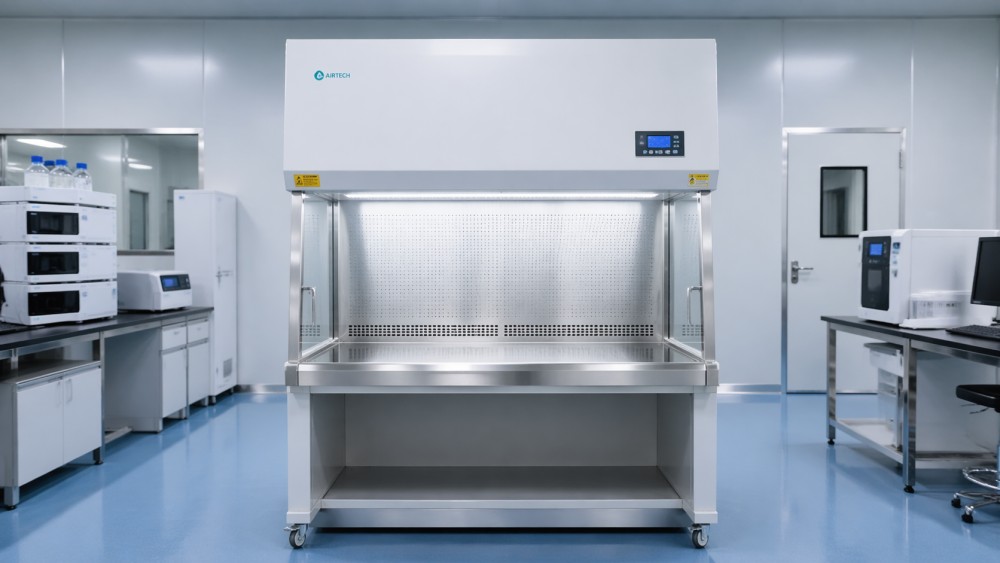
A Laminar Flow Unit is usually the better fit when the main requirement is product protection rather than personnel or environmental containment. In practical terms, this means the process depends on a continuously filtered, low-turbulence work zone that reduces particulate intrusion and supports repeatable handling. Typical decision points appear in sterile compounding support tasks, microelectronics preparation, optics assembly, media pouring, and sample preparation where contamination control is critical but hazardous aerosol containment is not the primary need.
For cross-industry users, the key question is simple: does the process need unidirectional clean airflow, or does it require a certified containment barrier? A Laminar Flow Unit addresses the first requirement. It typically delivers HEPA- or ULPA-filtered airflow across a defined workspace, often with face velocity ranges selected by design intent and local validation protocol. In many facilities, this becomes the most efficient solution for ISO-oriented product protection zones, especially where workflows must remain visible, accessible, and operationally simple.
This distinction matters because procurement teams often compare Laminar Flow Units directly with Biosafety Cabinets without separating contamination control from biosafety containment. That can lead to over-specification, higher lifecycle cost, or compliance mismatch. A unit chosen for the wrong risk profile can also complicate operator training, maintenance planning, and requalification schedules over 2–4 quarters of facility operation.
At G-LCE, this evaluation is framed through benchmarked performance, regulatory context, and implementation practicality. For CTOs, lab directors, quality teams, and project managers, the issue is not only what the airflow system does on day one, but how it performs within GMP routines, ISO cleanliness expectations, and integrated facility design over a 3-stage lifecycle: specification, validation, and sustained operation.
Core indicators that favor Laminar Flow Units
- The process needs product protection from particles, not containment of hazardous biological agents or toxic aerosols.
- The operation benefits from open front access, straightforward ergonomics, and easier line-side integration into cleanroom engineering layouts.
- The facility is working within GMP, ISO 14644, or high-purity production logic where airflow stability and cleanliness zoning are more important than biosafety classification.
- Budget holders need a lower complexity solution with predictable maintenance intervals, common filter replacement planning, and reduced operator retraining burden.
Laminar Flow Unit vs Biosafety Cabinet vs Class III: what changes in real decisions?
The biggest source of confusion in technical evaluation is assuming these systems are interchangeable because all of them use filtered airflow. They are not. A Laminar Flow Unit is designed to protect the work and process environment. A Biosafety Cabinet, depending on class and type, is designed to balance personnel, product, and environmental protection. A Class III Biosafety Cabinet is a fully enclosed, gas-tight containment system intended for the highest-risk work. The procurement pathway should therefore begin with hazard assessment, not with cabinet dimensions.
For technical assessors, the distinction affects airflow direction, access method, room dependency, exhaust strategy, validation burden, and operating protocol. For commercial evaluators, it affects acquisition cost, infrastructure dependency, utility coordination, and long-term service planning. A lower-risk aseptic preparation task may be slowed down unnecessarily by high-containment equipment, while a hazardous workflow placed under a Laminar Flow Unit can create an unacceptable safety gap.
The table below provides a procurement-oriented comparison across the three solution types. It is intended for mixed audiences, including operators, quality managers, engineering leads, procurement teams, and distributors who need a practical way to position product protection, containment need, and facility complexity within a single view.
The comparison shows why Laminar Flow Units remain highly relevant in modern laboratory and production environments. When the process risk profile does not justify containment hardware, a Laminar Flow Unit often provides the cleaner economic and operational fit. For many organizations, that difference can affect not only initial capital planning but also filter service intervals, utility integration, and recurring qualification schedules across 12-month operating cycles.
Why buyers often over-specify containment
Over-specification usually comes from three assumptions: that more containment is always safer, that auditors prefer the highest class of cabinet, and that one system can cover all future use cases. In reality, auditors look for suitability, validation, and risk alignment. A solution that exceeds the hazard need but complicates airflow balance, cleaning practice, and operator access may create process inefficiencies without improving compliance.
This is especially relevant in multi-user facilities, CDMO-style laboratories, advanced manufacturing support zones, and semiconductor or life science environments where several workstations may be installed in parallel. Choosing the right unit type at the start can prevent repeated redesign during the next 6–18 months of expansion.
Which applications across industries justify Laminar Flow Units?
Laminar Flow Units are not limited to one sector. Their strongest fit appears wherever particle control, stable airflow, and local clean protection support process yield, sample integrity, or regulatory cleanliness expectations. This applies across pharmaceuticals, medical devices, semiconductor fabrication support, advanced materials, optics, food microbiology preparation, hospital pharmacy support areas, and research laboratories handling non-hazardous workflows.
In pharmaceutical and GMP-sensitive settings, these units are often used to create controlled work zones for weighing support, sterile component staging, packaging preparation, and product exposure steps that need cleanliness discipline. In electronics and semiconductor environments, they may support wafer-adjacent handling, micro-assembly, and defect-sensitive preparation where low particle burden is essential to yield protection. In precision manufacturing, they can support tasks where even small contamination events can affect optical clarity, bonding quality, or downstream rejection rates.
For project managers and engineering leads, the main advantage is that Laminar Flow Units can often be incorporated as modular clean protection points without requiring full high-containment infrastructure. That matters when deployment timelines are compressed to 7–15 days for local installation planning, or 2–6 weeks for validation-ready integration, depending on site readiness, utilities, and documentation depth.
The application table below helps clarify where these units typically fit and where another solution should be considered instead. This is especially useful for distributors, procurement teams, and quality functions that must align user requests with risk-based equipment selection.
What this means in practice is straightforward: if the workflow centers on protecting a process, component, or sample from contamination, Laminar Flow Units deserve serious consideration. If the workflow involves pathogens, toxic compounds, or aerosolized hazards, the evaluation must move toward containment-capable systems. Making that distinction early can save one full procurement cycle and reduce redesign risk for engineering and quality teams.
Typical deployment patterns
- Standalone installation for a single clean task in research, pharmacy support, or small-batch production.
- Clustered placement in a controlled environment where 2–8 workstations must support similar cleanliness protocols.
- Integrated modular use within larger cleanroom engineering projects to create local protection zones without full room-wide redesign.
What technical and compliance factors should procurement teams verify?
A Laminar Flow Unit should never be selected on dimensions and price alone. Technical evaluation must connect airflow performance, filter efficiency, work opening geometry, cleanability, materials compatibility, noise, lighting, service access, and validation documentation. For regulated or quality-sensitive environments, the equipment must also fit the site’s qualification approach, preventive maintenance schedule, and change control expectations.
From a compliance perspective, the most relevant frameworks often include ISO 14644 for cleanroom and controlled environment logic, GMP principles for cleanliness and process consistency, and site-specific quality procedures for installation qualification and operational verification. A Laminar Flow Unit is not certified the same way as a Biosafety Cabinet under NSF/ANSI 49 logic, so teams must avoid applying the wrong compliance language when writing URS documents or tender specifications.
For technical evaluators, it helps to organize the review into 5 key checkpoints: airflow pattern, filtration grade, workspace suitability, serviceability, and validation evidence. These checkpoints are especially important when multiple departments are involved, because operations may focus on usability, quality may focus on documentation, and procurement may focus on lead time and total cost.
The checklist below can be used in RFQ discussions, distributor screening, or cross-functional review meetings. It gives procurement and engineering teams a practical way to compare options without collapsing technical and compliance requirements into a single generic specification.
5-point procurement checklist
- Confirm the risk profile first: verify that the process requires product protection only and does not require operator or environmental containment.
- Match the unit to the task size: evaluate internal workspace, sash or opening design, and whether the process involves large tools, repetitive hand movement, or frequent material transfer.
- Review filtration and airflow verification expectations: define acceptance criteria, requalification interval, and whether the site uses quarterly, semiannual, or annual checks.
- Assess integration constraints: verify power supply, room classification, HVAC interaction, installation access, and cleaning chemical compatibility.
- Request documentation early: ask for performance data, drawings, maintenance access information, and support for FAT, SAT, IQ, or OQ if relevant to the project.
Common specification mistakes
One frequent mistake is copying Biosafety Cabinet specifications into a Laminar Flow Unit tender. Another is defining cleanliness goals without considering room-side conditions, operator movement, or upstream material handling. Teams also underestimate maintenance access, which can become critical in dense facilities where service clearance and filter replacement routing affect uptime.
In fast-moving projects, lead time pressure can push buyers to approve units before validation assumptions are settled. That can create delays later, especially if the site requires 4-step acceptance logic such as installation review, airflow test, particle verification, and operational sign-off before release to production.
How do cost, alternatives, and lifecycle value compare?
Capital price is only one part of the decision. The better fit should be judged by total lifecycle value across acquisition, installation, qualification, operator training, preventive maintenance, filter replacement, downtime risk, and process suitability. In many non-hazardous applications, Laminar Flow Units are attractive because they deliver focused clean protection without the higher containment-related complexity associated with advanced biosafety systems.
Alternative solutions depend on the use case. A simple clean bench may be sufficient for low-criticality tasks, while a Biosafety Cabinet becomes necessary once aerosol or biohazard concerns enter the workflow. In larger facilities, an integrated cleanroom engineering upgrade may outperform local equipment if the process requires broader zoning control across multiple stations. This is why a 1-unit purchase and a 20-station expansion should not be assessed with the same economic logic.
The cost view below is not a price list. It is a decision framework that helps procurement and commercial teams estimate where cost drivers typically increase: infrastructure dependency, validation burden, and service intensity. This distinction is useful when budgeting across 1-year, 3-year, or project-phase spending windows.
For many buyers, the most practical conclusion is this: a Laminar Flow Unit is the better fit when it solves the exact contamination problem without adding unnecessary containment infrastructure. That balance improves not only procurement efficiency but also day-to-day usability, service planning, and project execution confidence.
Lifecycle questions worth asking before approval
- What is the expected requalification frequency, and who performs it on-site or through a service partner?
- How long does filter replacement typically affect workstation availability: a few hours, one shift, or more than one day?
- Will the current process remain stable for the next 12–24 months, or is a broader cleanroom engineering solution likely to be needed soon?
FAQ and next-step guidance for buyers, engineers, and quality teams
Before final selection, most teams still have practical questions about fit, compliance, and implementation. The answers below address common search intent from information researchers, operators, technical reviewers, procurement specialists, and project leaders working across regulated and high-purity environments.
How do I know if a Laminar Flow Unit is suitable for my process?
Start with hazard classification. If the process involves non-hazardous materials and the main objective is to protect samples, components, or products from particles, a Laminar Flow Unit may be suitable. If the work can generate harmful aerosols or involves infectious agents, move toward a Biosafety Cabinet assessment instead. A short 3-step review of process risk, operator exposure, and cleanliness target usually clarifies the direction quickly.
What should procurement ask suppliers before comparing quotations?
Ask for airflow and filtration details, dimensional drawings, utility requirements, service access needs, validation support scope, and estimated delivery window. Also ask whether the quotation includes accessories, site commissioning, and documentation needed for IQ or OQ style review. Without those details, the lowest quote may not be the lowest project cost.
What is a realistic delivery and implementation timeline?
For standard configurations, many projects plan in a range of 2–6 weeks for supply and site coordination, though actual lead time depends on region, customization, and approval workflow. Validation-ready deployment may add several days to 2 weeks depending on FAT, SAT, documentation review, and local acceptance testing requirements.
Can a Laminar Flow Unit replace a Biosafety Cabinet to save cost?
Only when containment is not required. Replacing a Biosafety Cabinet with a Laminar Flow Unit for a hazardous process would be a safety and compliance error. Cost reduction is valid only when the process risk assessment confirms that product protection is sufficient and personnel/environmental containment is not part of the requirement.
Why work with G-LCE on evaluation and specification?
Because the decision is rarely only about one cabinet or one workstation. G-LCE connects Laminar Flow Units, Biosafety Cabinets, Class III containment systems, cleanroom engineering, UHP process support, and regulatory frameworks into one technical view. That helps decision-makers avoid isolated purchasing errors and align equipment choice with ISO 14644 logic, GMP expectations, site safety strategy, and long-term facility planning.
If you are comparing options, contact us for parameter confirmation, application fit review, product selection support, delivery timeline discussion, customization boundaries, regulatory documentation expectations, and quotation alignment. We can help clarify whether a Laminar Flow Unit is the better fit, whether a containment-capable alternative is necessary, and how to structure a specification that supports both operational performance and audit readiness.
Related News
- IQ/OQ/PQ Cleanroom Validation Protocols Explained for New Facility QualificationJun 22, 2026Cleanroom validation protocols (IQ/OQ/PQ) explained for new facility qualification. Learn how to reduce risk, support GMP/ISO readiness, and avoid costly audit or startup delays.
- How to Calculate Cleanroom Air Change Rate Metrics for ISO Class ComplianceJun 20, 2026Cleanroom air change rate metrics explained for ISO Class compliance. Learn ACH formulas, key validation factors, and practical checks to improve performance and reduce risk.
- Cleanroom Pass Box Wholesale: What Buyers Should Check Before Comparing SuppliersJun 14, 2026Cleanroom pass box wholesale buyers should compare more than price. Learn what to check in materials, interlocks, airflow, GMP/ISO support, and total cost before choosing suppliers.
- Innovations in Energy Saving FFU: Which Upgrades Improve Cleanroom Efficiency?Jun 13, 2026Innovations in energy saving FFU explained: discover which upgrades boost cleanroom efficiency, cut energy use, and support stable airflow, compliance, and long-term reliability.