Related News
- 00
0000-00
Compliance Investment Updates: Which Environmental Controls Are Attracting Capital? - 00
0000-00
How to Set Up Cleanroom Pressure Differential Monitoring for Audit-Ready Data - 00
0000-00
Importing Gas Delivery Equipment: A Buyer’s Checklist for Compliance and Total Cost - 00
0000-00
How to Evaluate an Air Compressor Manufacturer for Cleanroom Gas Supply Projects - 00
0000-00
Which FFU Airflow Uniformity Metrics Matter for European Cleanroom Acceptance?
Weekly Insights
Stay ahead with our curated technology reports delivered every Monday.
In cleanroom engineering, the fastest cost overruns usually do not come from one dramatic failure. They come from early decisions that look reasonable on paper but create expensive ripple effects during construction, commissioning, validation, operation, and audit readiness. For buyers, engineers, and project leaders, the key question is not simply how to build a compliant cleanroom, but how to avoid design and procurement mistakes that multiply lifecycle cost, slow qualification, and reduce operational resilience. The most costly errors typically involve misaligned cleanliness targets, poor process-flow planning, under-specified utilities, weak integration between equipment and room design, and late-stage compliance corrections.
For organizations planning controlled environments for pharma, biotech, semiconductor, medical device, advanced research, or high-containment applications, the practical takeaway is clear: cost control in cleanroom projects is largely decided before installation begins. If the initial engineering brief is incomplete, even premium equipment such as biosafety cabinets, laminar flow units, UHP gas systems, or precision automation platforms cannot fully compensate for design mistakes embedded in the facility itself.
Why cleanroom engineering mistakes become expensive so quickly
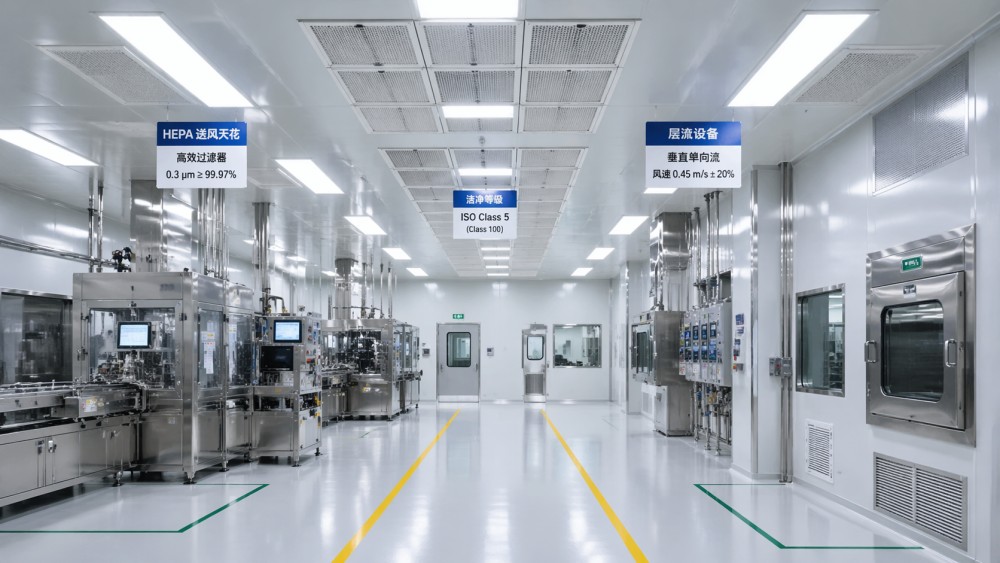
Cleanroom projects are uniquely sensitive to compounding errors because the environment, process, utilities, people flow, material flow, and regulatory framework are tightly linked. A mistake in one area often forces redesign in several others. For example, an incorrect air change strategy can affect HVAC sizing, energy consumption, pressure cascade stability, filtration layout, environmental monitoring, and validation protocol design at the same time.
This is why cost escalation happens fast. The earlier the error is made, the more systems it touches. A planning mistake identified during concept design may be manageable. The same mistake discovered during FAT, SAT, IQ/OQ, or pre-audit remediation can trigger procurement changes, downtime, contractor rework, delayed product launch, or failed regulatory acceptance.
For most stakeholders, the real cost is not limited to CAPEX. It includes:
- Delayed go-live and revenue loss
- Repeated validation and requalification costs
- Higher long-term HVAC and utility consumption
- Increased contamination or deviation risk
- Operational inefficiency for staff and materials handling
- Documentation gaps affecting GMP compliance or biosafety readiness
Mistake 1: Setting the wrong cleanliness or containment target at the start
One of the most common cleanroom engineering mistakes is choosing a classification or containment strategy that does not match the actual process risk. Some projects overdesign the facility, driving unnecessary capital and operating costs. Others underdesign it, creating future compliance gaps and costly retrofits.
This usually happens when teams define the cleanroom around a generic specification instead of actual product, process, and regulatory requirements. In pharmaceutical and life science settings, this can mean misunderstanding the relationship between room classification, aseptic process steps, biosafety requirements, and personnel interventions. In electronics and advanced manufacturing, it may mean building to an unrealistically strict particulate target where process controls would deliver better value.
What decision-makers should verify early:
- Required ISO class by process zone, not by blanket facility assumption
- Whether biosafety, sterility, cross-contamination, or particle control is the primary design driver
- Pressure cascade and containment logic for each room function
- Actual occupancy, equipment heat load, and intervention pattern
- Applicable standards, including ISO 14644, GMP expectations, and site-specific EHS policies
A correct target prevents both overinvestment and underperformance. It also improves procurement alignment because equipment suppliers can be assessed against the real environmental need rather than a vague “high-spec” request.
Mistake 2: Treating process flow and room layout as secondary issues
Many costly facilities look technically impressive but operate inefficiently because people flow, material flow, waste flow, and maintenance access were not designed together. This mistake often appears when architecture is finalized before process mapping is fully validated.
A cleanroom is not just an enclosed clean space. It is a controlled workflow system. If operators must cross paths with incoming materials, if waste exits through high-grade corridors, or if maintenance teams need to enter critical zones for routine access, contamination risk and labor inefficiency both increase.
Typical consequences include:
- Longer gowning and transfer times
- Higher risk of mix-ups or cross-contamination
- Disrupted pressure differentials due to traffic patterns
- Operational workarounds that undermine SOP discipline
- Layout changes after commissioning, which are especially expensive
The most valuable approach is to map the actual operating sequence before freezing layout decisions. That includes raw material entry, finished goods exit, consumables replenishment, sample movement, waste removal, equipment service routes, and emergency response access. This is especially critical in facilities combining cleanroom engineering with biosafety cabinets, laboratory automation, or high-value analytical instrumentation.
Mistake 3: Underestimating HVAC, pressure control, and utility integration
HVAC is often discussed as the center of cleanroom performance, but the bigger issue is system integration. A design may appear sufficient at a high level, yet fail under real operating conditions because airflow, filtration, pressure control, temperature, humidity, exhaust strategy, and utility demand were not coordinated.
Fast-rising costs often come from:
- Oversized systems with excessive energy consumption
- Undersized systems that cannot maintain room recovery or pressure stability
- Poor zoning that makes future expansion difficult
- Inadequate redundancy for critical operations
- Insufficient coordination with UHP gas, exhaust, chilled water, power quality, and BMS controls
In high-performance environments, utility decisions are not background engineering details. They directly affect uptime, auditability, and total cost of ownership. For example, a laboratory automation platform or precision instrument may require tighter temperature stability, cleaner compressed gas, or a more reliable power profile than the room-level design originally assumed. If these requirements are discovered late, retrofitting can be disruptive and expensive.
Technical evaluators and project managers should request scenario-based engineering reviews, including peak occupancy, partial load operation, maintenance mode, and future process scaling. A design that works only under ideal conditions is not a low-risk design.
Mistake 4: Selecting equipment before confirming facility compatibility
Another major source of avoidable cost is buying critical equipment too early or evaluating it in isolation from the facility. This is common with biosafety cabinets, laminar flow units, pass boxes, isolators, robotics platforms, and precision instruments. The unit may meet product specifications, but still create major installation or operational issues once integrated into the room.
Compatibility questions that are often missed include:
- Actual footprint and service clearance
- Heat rejection and room cooling impact
- Noise and vibration sensitivity
- Exhaust requirements and ducting constraints
- Cleaning chemistry compatibility
- Calibration, maintenance, and filter replacement access
- Digital integration with monitoring or automation systems
For procurement teams, this means lowest purchase price is rarely the best decision metric. A less expensive unit that increases installation complexity, validation burden, utility demand, or downtime exposure can become the most expensive option over the first few years of operation.
The better approach is cross-functional equipment review involving engineering, operations, quality, EHS, validation, and procurement before final purchase approval. This reduces the risk of buying technically acceptable but operationally mismatched assets.
Mistake 5: Leaving GMP compliance and validation logic too late
Many cleanroom projects still treat compliance documentation as a final-stage activity. That is a costly mistake. GMP compliance, biosafety obligations, and qualification strategy should shape design decisions from the beginning, not be layered on after construction.
When validation logic is delayed, teams often discover that critical design assumptions were not documented, traceability is incomplete, test points are poorly located, alarm strategies are inadequate, or material selections do not support the required cleaning and monitoring regime. These issues can delay site acceptance and force corrective work just when organizations expect to begin operations.
To reduce this risk, teams should align early on:
- User Requirement Specification (URS)
- Functional and design specifications
- Risk assessments tied to critical quality attributes
- Commissioning and qualification plan
- Environmental monitoring concept
- Alarm, deviation, and data integrity strategy
- Cleaning, maintenance, and change control expectations
For enterprise decision-makers, this is not administrative overhead. It is one of the most effective ways to protect schedule certainty and avoid hidden post-installation costs.
Mistake 6: Ignoring lifecycle cost in favor of upfront project savings
Some of the most damaging cleanroom engineering mistakes are justified as short-term budget control. Lower-cost wall systems, simplified controls, reduced monitoring points, minimal redundancy, or basic filtration choices may appear financially responsible during tender review. But if they increase energy usage, maintenance frequency, downtime, contamination risk, or upgrade difficulty, the business case quickly turns negative.
Lifecycle cost should include more than acquisition and installation. It should assess:
- Energy use per operating mode
- Filter replacement frequency and access labor
- Service downtime impact
- Spare parts availability
- Qualification and requalification effort
- Cleaning durability and surface repair rates
- Adaptability to future process or regulatory changes
This matters especially for multinational organizations or high-throughput facilities where the cost of one day of delayed production or sample disruption can outweigh initial savings achieved during procurement.
How to judge whether a cleanroom design is likely to control cost well
For readers comparing suppliers, reviewing project proposals, or assessing internal plans, several signals indicate whether a design is truly robust.
Strong cleanroom engineering proposals usually show:
- A clear link between process risk and environmental classification
- Detailed people/material/waste flow logic
- Integrated equipment and utility planning
- Defined compliance pathway from design through qualification
- Transparent assumptions on operating cost and maintenance
- Expansion flexibility without major reconstruction
- Cross-functional review evidence, not siloed vendor claims
Weak proposals often rely on generic specifications, broad performance promises, or incomplete compliance language. If the design narrative does not explain why key choices were made, the project may be carrying hidden risk.
A practical pre-project checklist for buyers, engineers, and project leaders
Before freezing specifications or issuing final purchase decisions, use this short checklist:
- Have we defined the real contamination or containment risk by process step?
- Is the target ISO class or GMP zoning justified, not assumed?
- Have operator, material, waste, and maintenance routes been mapped?
- Are critical equipment requirements fully coordinated with the facility design?
- Can HVAC and utilities maintain performance under realistic operating scenarios?
- Have validation, monitoring, and compliance documentation been embedded early?
- Are we comparing suppliers on lifecycle value, not just purchase price?
- Do we understand upgrade paths if throughput or regulatory expectations change?
If multiple answers are still unclear, the project is probably not ready for final commitment. Clarifying these issues early is far cheaper than correcting them after installation.
Cleanroom engineering mistakes raise costs fast because controlled environments are highly interconnected systems, not standalone rooms. The biggest financial risks usually come from wrong early assumptions: misjudged cleanliness targets, inefficient layout logic, poorly integrated HVAC and utilities, equipment-facility mismatch, delayed compliance planning, and excessive focus on upfront savings. For technical evaluators, procurement teams, quality leaders, and business decision-makers, the smartest strategy is to assess cleanroom design through lifecycle performance, validation readiness, and operational fit. That is what separates a compliant facility on paper from a high-performance controlled environment that remains efficient, auditable, and scalable in real use.
Related News
- How to Evaluate Modular Cleanrooms for Pharmaceutical Expansion ProjectsAug 19, 2026Modular cleanrooms for pharmaceuticals: learn how to evaluate GMP fit, contamination control, scalability, and lifecycle value for faster, lower-risk pharma expansion projects.
- How to Evaluate a White Cement Supplier for Color Consistency, MOQ, and Lead TimeJul 14, 2026White cement supplier evaluation guide: learn how to compare color consistency, MOQ flexibility, and lead time reliability to reduce sourcing risk and choose with confidence.
- Cleanroom Doors Price Guide: What Affects Cost by Material, Rating, and Door Type?Jul 09, 2026Cleanroom doors price explained: compare how material, fire or airtight ratings, and door type affect cost, compliance, and long-term value before you request quotes.
- How to Compare Modular Cleanrooms in Europe for Fast Expansion ProjectsJul 07, 2026Modular cleanrooms Europe: compare suppliers for fast expansion with a focus on compliance, HVAC integration, validation support, and lower lifecycle risk.