
Related News
- 00
0000-00
Semiconductor Supply Chain Issues in E-Commerce: Risks and Mitigation - 00
0000-00
Market Analysis Techniques for Clean Energy Investment Decisions - 00
0000-00
Air Freight Rates Explained: Key Cost Drivers and Quote Checks - 00
0000-00
How to Choose an Air Shower OEM Supplier for Cleanroom Projects - 00
0000-00
What Are the ROI Metrics for Renewable Energy in Manufacturing Projects?
Weekly Insights
Stay ahead with our curated technology reports delivered every Monday.
For small labs, the short answer is: yes, laboratory automation can be worth it—but only when it solves a specific bottleneck, supports compliance needs, and delivers measurable gains in accuracy, throughput, or risk reduction. For many small facilities, the mistake is not adopting automation too early or too late; it is buying too much automation, too fast, without a clear operational case.
That is why the real evaluation should go beyond headline claims about efficiency. Small labs need to ask practical questions: Which tasks consume the most technician time? Where do errors, contamination risks, or documentation gaps occur? Which workflows are difficult to scale under GMP, ISO, or internal quality standards? When these questions are answered honestly, automation often becomes less of a luxury and more of a targeted infrastructure decision.
For lab managers, technical evaluators, procurement teams, and business decision-makers, the value of Laboratory Automation usually comes from a combination of repeatability, traceability, biosafety improvement, and better use of skilled staff—not simply labor replacement. In small labs especially, the best investments are often modular systems, precision instrumentation, and workflow-specific automation rather than full-scale robotic transformation.
What small labs really need to know before investing in laboratory automation
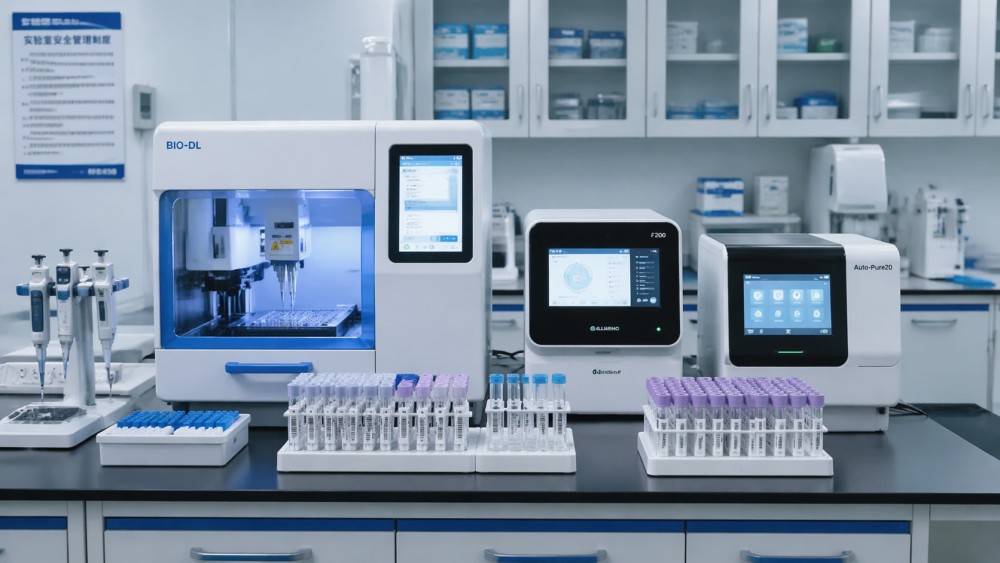
The core search intent behind “Is Laboratory Automation Worth It for Small Labs” is not theoretical. Readers want to know whether automation will pay off in real operating conditions, whether it will help with compliance and quality control, and whether the benefits justify the cost and implementation burden.
Across roles, the concerns are usually consistent:
- Users and operators want easier workflows, fewer repetitive tasks, and less manual error.
- Technical evaluators want to compare system capability, integration, reliability, and validation requirements.
- Procurement and business teams want to understand total cost of ownership, ROI, service burden, and upgrade risk.
- Quality and safety leaders want improved documentation, contamination control, and support for GMP, ISO, or biosafety procedures.
- Project managers and lab directors want solutions that fit existing facilities, including cleanroom engineering, biosafety cabinets, and controlled environment constraints.
So the most useful way to judge value is not asking, “Should we automate the lab?” but rather, “Which process should we automate first, and what measurable problem will it solve?”
When laboratory automation is worth it for a small lab
Automation is usually worth it when at least one of the following conditions exists:
- High manual repetition: Sample prep, pipetting, plate handling, labeling, environmental monitoring, or routine testing consumes large amounts of staff time.
- Error sensitivity: Even small mistakes create rework, failed batches, invalid results, or compliance exposure.
- Growth pressure: The lab needs to increase output without proportional increases in headcount or floor space.
- Documentation requirements: Digital records, audit trails, and process consistency are becoming mandatory.
- Biosafety or contamination concerns: Automating enclosed or standardized steps can reduce exposure and improve control.
- Staffing constraints: Skilled analysts are difficult to hire, retain, or reassign efficiently.
For example, a small GMP-oriented lab may find automation worthwhile not because it doubles output, but because it improves data integrity, standardizes critical handling steps, and reduces the probability of deviation events. In such settings, avoiding one serious quality failure may justify the investment more than any labor-saving estimate.
When automation may not be worth it yet
Automation is not always the right move. In some small labs, the better decision is to delay or narrow the investment.
Common reasons include:
- Workflow volumes are too low or too variable.
- Methods change frequently, making rigid automation hard to justify.
- Core SOPs are still unstable or poorly standardized.
- The team lacks maintenance, validation, or digital integration support.
- Available capital would be better spent on facility controls, biosafety upgrades, or essential precision instrumentation.
If a lab still struggles with inconsistent process design, weak environmental control, or inadequate containment, full automation may only amplify underlying problems. In those cases, foundational investments—such as improved cleanroom engineering, upgraded biosafety cabinets, better UHP gas delivery stability, or stronger workflow documentation—may deliver better returns first.
What benefits matter most in real small-lab operations
Small labs should focus on practical value, not generic marketing promises. The most meaningful benefits usually fall into five areas.
1. Better repeatability and data quality
Automation reduces variability in repetitive tasks. This matters in regulated or precision-driven environments where small deviations can affect outcomes, batch acceptance, or audit readiness.
2. Stronger compliance support
In GMP, ISO-aligned, and biosafety-sensitive operations, automated systems can improve procedural consistency, recordkeeping, user permissions, and traceability. That makes it easier to support inspections, investigations, and CAPA processes.
3. Improved biosafety and contamination control
Automated liquid handling, enclosed transfer, and controlled workflows can reduce direct contact with hazardous materials and lower contamination opportunities. In facilities using biosafety cabinets or controlled environments, this can be a significant operational advantage.
4. More efficient use of skilled labor
Automation rarely eliminates the need for qualified staff. Instead, it shifts personnel away from repetitive handling and toward interpretation, troubleshooting, quality review, and process optimization.
5. Better scalability without immediate expansion
For small labs with limited space, selective automation can increase throughput without requiring a complete facility redesign. This is especially important where cleanroom or containment infrastructure is expensive to expand.
What costs small labs often underestimate
The purchase price is only part of the decision. A realistic evaluation should include the total cost of ownership.
Small labs commonly underestimate:
- Validation and qualification: IQ/OQ/PQ, software validation, and documentation effort
- Training: Initial and ongoing operator competency
- Maintenance and service: Preventive maintenance, calibration, spare parts, and downtime response
- Integration: LIMS, ELN, MES, barcode systems, or instrument communication
- Facility fit: Power, HVAC load, bench layout, vibration control, cleanroom compatibility, or enclosure requirements
- Consumables and vendor dependency: Proprietary tips, cartridges, software licenses, and support contracts
This is why the best buying decision is rarely the cheapest instrument and rarely the most advanced platform. It is the system with the best fit between workflow need, compliance expectations, service model, and long-term operating burden.
How to calculate whether laboratory automation is worth it
Small labs do not need a perfect financial model, but they do need a disciplined one. A useful automation review should combine direct savings, risk reduction, and strategic value.
Start with these questions:
- How many hours per week does the target process consume?
- What is the current error, repeat-test, deviation, or contamination rate?
- How much growth is expected over 12 to 36 months?
- What does downtime cost in delayed release, missed deadlines, or lost capacity?
- Will automation reduce compliance risk or improve audit readiness?
- Can the system scale, or will it need replacement soon?
A small lab should compare:
- Current manual labor cost for the workflow
- Cost of rework, failed runs, and documentation issues
- Equipment price and implementation cost
- Annual service and consumables
- Potential revenue or capacity increase
- Quality and regulatory risk reduction
In many cases, the strongest business case comes from a blended outcome: moderate labor savings plus fewer errors plus easier compliance plus more predictable turnaround time.
Which automation options make the most sense for small labs
For most small labs, the smartest path is targeted, modular automation. That may include:
- Automated pipetting or liquid handling for repetitive sample prep
- Barcode tracking and digital sample identification
- Environmental monitoring automation in controlled environments
- Integrated precision instrumentation with direct data capture
- Automated documentation and audit trail software
- Compact robotic handling for high-frequency routine tasks
This staged approach has several advantages. It lowers capital risk, reduces disruption, simplifies training, and allows the lab to validate ROI before broader deployment. It also fits better with small-lab realities, where bench space, cleanroom zoning, and containment procedures may limit equipment footprint and layout flexibility.
For buyers operating in high-purity or high-containment environments, compatibility matters. A technically strong automation platform must also align with existing biosafety cabinets, airflow strategy, decontamination routines, and facility engineering requirements.
How small labs can reduce implementation risk
Even a good automation choice can fail if implementation is weak. To reduce risk, small labs should follow a structured process:
Define one priority workflow
Do not begin with a broad “lab modernization” goal. Start with one clearly measurable process that has visible pain points.
Map the current workflow
Document manual steps, operator touchpoints, timing, error sources, data handoffs, and environmental constraints.
Set success criteria early
Examples include reduction in hands-on time, lower deviation rates, improved turnaround time, or better traceability.
Check regulatory and validation impact
If the lab operates under GMP, ISO, or biosafety requirements, validation and change control planning should start before purchase.
Involve cross-functional stakeholders
Operators, QA, EHS, engineering, procurement, and management should all review the decision. This avoids buying a technically impressive system that creates practical problems later.
Plan service and support before installation
For small labs, vendor responsiveness can matter as much as hardware capability. Limited internal engineering resources make dependable support essential.
Final verdict: yes, but only if the investment is specific, measurable, and aligned with your lab’s real constraints
Laboratory automation is worth it for small labs when it addresses a defined operational bottleneck, improves quality or compliance, and fits the lab’s technical and financial reality. It is especially compelling where precision, traceability, biosafety, or scalability matter more than simple headcount reduction.
For many small labs, the right decision is not full automation. It is smart automation: modular, workflow-based, and engineered to work within existing controlled environments and regulatory obligations. If a system improves repeatability, reduces risk, supports cleaner documentation, and frees skilled staff for higher-value work, it is not just a technology upgrade—it is a strategic operational asset.
In other words, small labs should not ask whether automation is universally worth it. They should ask whether a specific automation investment will create enough measurable value in their workflow, facility, and compliance context. That is where the real answer lies.
Related News
- Is the Scientific Industrial Complex changing lab automation plans?May 28, 2026Scientific Industrial Complex is reshaping lab automation plans around biosafety, compliance, interoperability, and resilience. Discover what smart labs must prioritize next.
- Why cleanroom crane OEM supplier lead times varyMay 21, 2026Cleanroom crane OEM supplier lead times vary due to engineering, materials, compliance, and sourcing. Learn the key factors, reduce delays, and plan projects with more confidence.
- Why automated assembly equipment makers differ in valueMay 19, 2026Automated assembly equipment manufacturers differ in value through engineering depth, compliance readiness, integration, and support. Learn how to choose a supplier that reduces risk and improves ROI.
- Why Biotechnological Acceleration now reshapes lab timelinesMay 16, 2026Biotechnological Acceleration is reshaping lab timelines through compliance, biosafety, automation, and purity readiness. See what leaders must fix first to scale faster.