
Related News
- 00
0000-00
Compliance Investment Updates: Which Environmental Controls Are Attracting Capital? - 00
0000-00
How to Set Up Cleanroom Pressure Differential Monitoring for Audit-Ready Data - 00
0000-00
Importing Gas Delivery Equipment: A Buyer’s Checklist for Compliance and Total Cost - 00
0000-00
How to Evaluate an Air Compressor Manufacturer for Cleanroom Gas Supply Projects - 00
0000-00
Which FFU Airflow Uniformity Metrics Matter for European Cleanroom Acceptance?
Weekly Insights
Stay ahead with our curated technology reports delivered every Monday.
From Biosafety Cabinets and Class III Biosafety Cabinets to Laboratory Automation, Precision Instrumentation, and Cleanroom Engineering, equipment approval often slows where Regulatory Frameworks, GMP Compliance, and Security Engineering intersect. This article examines how standards, testing pathways, and supplier factors—including choosing a reliable HEPA filter manufacturer for Laminar Flow Units—create delays that affect technical teams, procurement, and executive decisions.
For global laboratories, advanced manufacturing sites, and high-containment facilities, equipment approval is rarely delayed by one issue alone. The real bottleneck usually appears at the intersection of product design, documentation depth, test evidence, installation context, and the regulatory expectations of different jurisdictions. What seems like a straightforward purchase can easily turn into a 6- to 24-week review cycle once quality, biosafety, and engineering teams begin formal evaluation.
This matters across industries because approval delays affect more than compliance calendars. They can postpone validation runs, disrupt cleanroom commissioning, extend factory acceptance testing, and slow capital deployment. For operators, the consequence is interrupted workflow. For technical evaluators, it is higher verification effort. For procurement and executives, it means budget risk, delayed utilization, and reduced confidence in supplier commitments.
Why Equipment Approval Slows Under Multi-Layer Regulatory Control
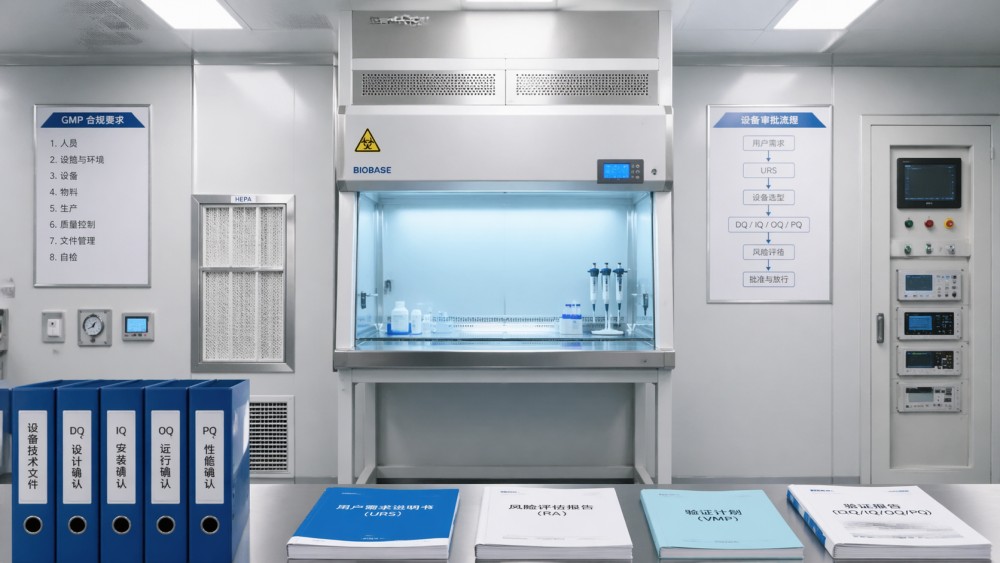
The first reason equipment approval slows is that many products must satisfy more than one framework at the same time. A biosafety cabinet may be evaluated against NSF/ANSI 49 performance expectations, local electrical safety rules, site HVAC integration requirements, and internal biosafety protocols. A cleanroom air handling solution may need alignment with ISO 14644, GMP expectations, particle control targets, and project-specific user requirement specifications. Each additional layer adds review steps, evidence requests, and cross-functional signoff.
The second reason is that regulators and end users do not assess all equipment equally. Low-risk utility devices may pass with standard conformity files and installation checks in 1 to 3 weeks. In contrast, equipment used in aseptic processing, BSL-3/4 environments, UHP gas delivery, or automated sample handling often requires a deeper review of airflow, containment, alarm logic, cleaning compatibility, and failure modes. In these categories, technical approval can extend to 8 to 16 weeks before purchase release or site acceptance.
The third reason is documentation maturity. Many delays come from incomplete design dossiers rather than poor hardware. Procurement teams may receive a quotation quickly, but quality and engineering reviewers still need P&IDs, material compatibility data, calibration plans, filter specifications, electrical drawings, decontamination guidance, and preventive maintenance intervals. If the supplier needs 5 to 10 business days for each clarification round, the total timeline expands rapidly.
Where approval friction usually appears
- Mismatch between global standards and local authority expectations, especially in cross-border projects.
- Insufficient verification evidence for airflow, leakage integrity, alarm response, or contamination control.
- Weak change control records when equipment has been modified after initial qualification testing.
- Missing supplier quality documents such as traceability records, calibration certificates, or material declarations.
The practical implication is that approval slowdowns are often systemic, not accidental. They reflect the complexity of regulated environments where a single asset must perform safely within a larger controlled ecosystem. In G-LCE-relevant sectors, that ecosystem includes people, clean utilities, containment barriers, software logic, and environmental monitoring. Approval is therefore not just about whether the machine works; it is about whether the machine works predictably inside a regulated process.
Which Regulatory Frameworks Commonly Create the Longest Review Cycles
Not every framework slows approval in the same way. Some frameworks emphasize product testing, while others focus on process control, installation context, or ongoing performance verification. Understanding this difference helps technical teams predict where the delay will occur: before purchase, during factory acceptance, during site qualification, or after installation when operational data is reviewed.
In practice, the longest approval cycles usually involve combinations of GMP, biosafety containment rules, cleanroom standards, and electrical or machinery safety obligations. For example, a robotic liquid handling platform in a GMP environment may meet base machinery requirements but still face approval delays because software access control, cleaning validation, and data integrity expectations are not resolved. Similarly, a laminar flow unit may satisfy airflow targets yet still be delayed because filter integrity evidence, recovery testing, or installation leakage control is incomplete.
The table below outlines common frameworks and the type of approval burden they create across laboratory, semiconductor, pharmaceutical, and high-containment settings.
The main conclusion is that the most time-consuming frameworks are those that evaluate both product performance and operational context. A test certificate alone is seldom enough. Reviewers increasingly ask how the equipment will behave over 12 months of use, under cleaning cycles, during alarm conditions, and after maintenance interventions.
A practical approval hierarchy
1. Product conformity
This includes baseline mechanical, electrical, and material compliance. If this layer is weak, the approval process stalls immediately.
2. Functional verification
This covers airflow, containment, precision, alarm response, software behavior, and repeatability. Reviewers often expect test data within defined ranges, not general marketing claims.
3. Site integration and lifecycle control
This is where many projects lose time. Utility loads, room pressure cascades, maintenance access, spare parts strategy, and requalification intervals must all be reconciled before final approval.
How Supplier Readiness and Component Choices Delay Approval
Supplier performance has a direct impact on approval speed. Two products with similar specifications can produce very different approval timelines depending on how quickly the supplier provides technical files, responds to deviations, and supports qualification. In regulated procurement, a short lead time is less useful than a complete and audit-ready submission package.
One common example is HEPA filtration in laminar flow units and other controlled-air systems. Many buying teams focus on filter efficiency alone, but approval reviewers typically examine a broader set of variables: media consistency, housing fit, scan-test readiness, pressure drop profile, replacement intervals, and documentation traceability. If a HEPA filter manufacturer cannot provide consistent specifications or test records, the entire air system review may stop until evidence is updated.
This issue is not limited to filtration. It also affects sensors, PLC modules, pressure regulators, robotic end effectors, safety interlocks, and high-purity tubing. A single undocumented critical component can trigger a design review loop, especially where contamination, operator safety, or product integrity is at stake. In many projects, 20% of the components create 80% of the approval questions.
Supplier factors that most often trigger review delays
- Document response times longer than 3 to 5 business days for technical clarifications.
- No standard package for drawings, certificates, FAT protocols, and preventive maintenance instructions.
- Inconsistent revision control across manuals, labels, and qualification support documents.
- Critical component sourcing changes without formal change notification.
The table below shows how component and supplier readiness influence approval outcomes in controlled environments.
For procurement teams, the lesson is clear: approval risk should be scored during supplier selection, not after the purchase request is raised. A practical vendor review should include at least 6 checkpoints: documentation completeness, certification scope, change control discipline, field service capability, spare part continuity, and response SLA. This approach often reduces downstream approval friction more effectively than negotiating unit price alone.
A Faster Approval Path: From Specification to Site Qualification
The fastest approval projects usually start with a clearer specification package. Instead of relying only on product brochures, high-performing teams define a user requirement specification that links operational needs, contamination risk, utility constraints, software expectations, and maintenance strategy. This creates a common reference for engineering, quality, EHS, and procurement before the supplier quote is finalized.
A second accelerator is staged evidence review. Rather than waiting for final delivery, many regulated buyers now request technical files in 3 gates: pre-award review, pre-FAT review, and pre-shipment review. Each gate can remove approval uncertainty earlier. For complex equipment, this can save 2 to 6 weeks compared with resolving all issues after factory build completion.
A third accelerator is explicit responsibility mapping. Delays often happen because no one knows who owns airflow testing, who approves software access levels, or who signs off on cleaning compatibility. A simple approval matrix reduces rework by assigning technical, quality, safety, and commercial responsibilities before installation begins.
Recommended 5-step approval workflow
- Define risk-based URS with 4 key blocks: performance, compliance, integration, and maintenance.
- Prequalify supplier using document readiness, service capability, and critical component traceability.
- Review FAT and verification protocols before manufacturing completion, not after.
- Align site utilities, room classification, pressure cascade, and installation access at least 2 to 3 weeks before delivery.
- Execute IQ/OQ or equivalent site verification with deviation closure targets, typically within 10 business days.
Typical approval timing by project maturity
Projects with defined requirements and complete supplier files often complete technical approval in 3 to 6 weeks for moderate-risk equipment. Projects with fragmented specifications, late utility decisions, or incomplete evidence may stretch to 10 to 20 weeks. The difference is rarely due to the equipment alone; it comes from process discipline across the approval chain.
For high-containment or GMP-critical assets, it is also wise to schedule requalification planning at the approval stage. If annual certification, 6-month calibration, or filter integrity retesting is expected, those obligations should already be visible in the total cost and lifecycle review. This prevents later disputes between engineering, quality, and finance teams.
Common Mistakes, FAQ, and What Buyers Should Ask Before Approval
Many delays come from avoidable mistakes rather than difficult regulations. One common mistake is assuming that a certificate from one region automatically satisfies another region’s site expectations. Another is treating installation as a logistics event instead of a qualification event. A third is accepting broad supplier claims such as “GMP ready” or “cleanroom compatible” without defining the exact performance criteria, materials, and test boundaries required.
Buyers should also distinguish between approval for purchase and approval for operation. A system may be approved commercially but still not be approved for production use until airflow balancing, calibration, software checks, and operator training are completed. In controlled environments, this final stage often determines whether the asset delivers value on time or remains idle for another 2 to 4 weeks.
The most effective procurement questions are specific. Ask for evidence of test conditions, document revision control, service response time, spare part continuity, and change notification process. Ask how the supplier supports deviations, not just how the equipment performs in ideal conditions. These questions reveal whether the supplier can support approval under real operational pressure.
FAQ: Which equipment categories usually face the longest approval delays?
Equipment with direct impact on sterility, containment, hazardous gas handling, or data-controlled process execution usually faces the longest review. This includes Class III biosafety cabinets, isolator-linked airflow systems, UHP gas distribution skids, and automated platforms with validated software logic. These categories may require 2 to 4 review groups instead of a single engineering signoff.
FAQ: How long should buyers plan for approval before issuing a final PO?
For standard laboratory equipment, 1 to 3 weeks may be enough. For controlled-environment or GMP-related systems, a practical planning range is 4 to 10 weeks. For highly customized containment, automation, or facility-integrated systems, buyers should allow 8 to 16 weeks, especially when multiple departments must review documents and FAT protocols.
FAQ: What should be checked when selecting a HEPA filter manufacturer?
Check 5 points: test traceability, pressure drop consistency, seal and frame compatibility, installation guidance, and replacement criteria. For laminar flow units, buyers should also confirm whether the filter design supports in-situ integrity testing and whether the supplier can document performance within the required airflow envelope after installation.
FAQ: What is the best way to reduce rework during approval?
Use a shared approval matrix and a document checklist before final design freeze. Teams that align URS, FAT, site utilities, and maintenance assumptions early typically reduce approval rework significantly. Even a simple checklist of 10 to 15 required documents can prevent repeated clarification cycles later.
Regulatory frameworks slow equipment approval most when they intersect with high-risk operations, fragmented documentation, and weak supplier readiness. The delay is rarely caused by one standard in isolation. It comes from the combined burden of proving performance, containment, safety, traceability, and lifecycle control across different stakeholders.
For organizations managing cleanroom engineering, biosafety, UHP delivery, precision instrumentation, or laboratory automation, the most effective strategy is to evaluate approval risk as early as technical selection. Stronger requirements, earlier evidence review, and better supplier qualification shorten the path from specification to operation. If you need support comparing regulated equipment pathways, benchmarking supplier readiness, or building a more approval-efficient procurement strategy, contact us to discuss a tailored solution or request more technical guidance.
Related News
- Compliance Investment Updates: Which Environmental Controls Are Attracting Capital?Sep 16, 2026Compliance investment updates reveal where capital is flowing: smarter containment, monitoring, ultra-pure utilities, emissions control, and resilient systems.
- Solar Panels Price Guide: What Buyers Should Compare Beyond Cost per WattSep 09, 2026Solar panels price is only the starting point. Compare energy yield, warranties, supplier reliability, installation fit, and lifecycle value to make a smarter solar investment.
- Certificate of Origin Form: Required Fields and Export Compliance ChecksSep 08, 2026Certificate of origin form guide: verify required fields, origin rules, supporting evidence, and export compliance checks to prevent delays and support confident global shipments.
- Cross-Border Trade Updates in Europe: Key Regulatory Changes for BusinessesSep 01, 2026Cross-border trade updates Europe: discover key customs, product compliance, sustainability and UK-EU regulatory changes to keep business shipments moving smoothly.