
Weekly Insights
Stay ahead with our curated technology reports delivered every Monday.
Phasing cleanroom engineering is usually the fastest way to reduce upfront capital pressure without delaying the performance, compliance, and operational outcomes that matter most. For most organizations, the best approach is not to build everything at once, but to sequence critical infrastructure, qualified production areas, and future expansion modules in a way that accelerates usable capacity, shortens validation timelines, and protects GMP compliance, biosafety, and long-term scalability. If you are comparing controlled environment investments—from laminar flow units and biosafety cabinets to laboratory automation, precision instrumentation, and support systems from a HEPA filter manufacturer—the real ROI often depends less on unit price and more on how intelligently the project is phased.
For project owners, procurement teams, technical evaluators, and business decision-makers, the central question is straightforward: which cleanroom elements must be delivered first to generate value early, and which can be deferred without creating compliance or redesign risk? The answer depends on your process criticality, regulatory exposure, throughput forecast, contamination control strategy, and validation roadmap. A phased model works best when it is built around operational milestones rather than construction convenience alone.
Why phased cleanroom engineering often delivers faster ROI than a full build at once
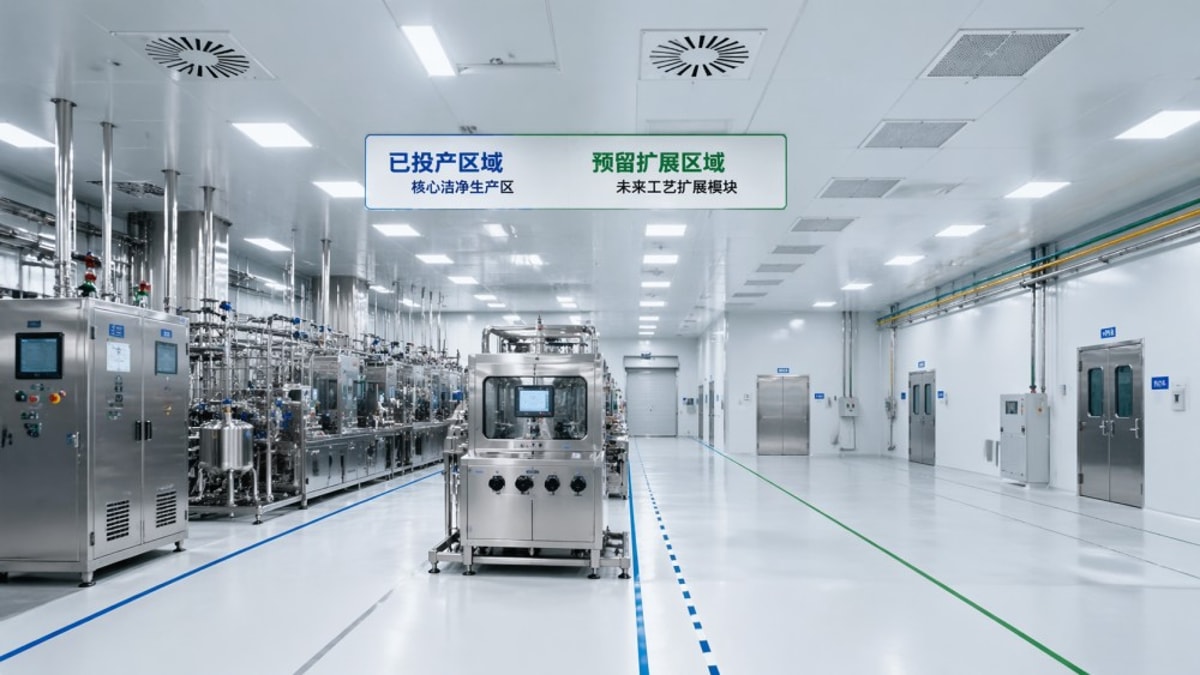
The core search intent behind this topic is practical, not theoretical. Readers want to know how to structure a cleanroom project so that money starts working earlier, while technical and compliance risks remain under control. In most cases, a phased cleanroom engineering strategy improves ROI for five reasons:
- Earlier operational start: Critical production or research zones can begin operation before full site completion.
- Lower initial capital burden: Budget is allocated to revenue-linked or mission-critical spaces first.
- Faster qualification and validation: Smaller initial scopes are easier to commission, test, and document.
- Better demand alignment: Capacity expansion follows actual utilization instead of speculative forecasts.
- Reduced redesign waste: Lessons from Phase 1 can improve later phases.
This is especially relevant in sectors where cleanroom performance directly affects product yield, batch release, biosafety, or regulatory readiness. Pharmaceutical manufacturing, cell and gene therapy, semiconductor fabrication, medical device assembly, advanced laboratories, and high-containment applications all benefit when the build sequence is aligned with process criticality.
By contrast, a single-stage “build everything now” model can lock organizations into oversized HVAC capacity, underused classified space, unnecessary utility investments, and longer periods before productive use begins. The larger and more compliance-sensitive the facility, the more expensive these delays become.
What should be included in Phase 1 to create usable value quickly
The first phase should not simply be the easiest part to construct. It should be the part that delivers the earliest measurable business, operational, or compliance value. That usually means Phase 1 should include the minimum complete environment needed to support a valid workflow.
For many projects, Phase 1 should prioritize:
- Core process rooms tied directly to revenue, research milestones, or regulated output
- Essential HVAC and pressure cascade systems sized for immediate loads but designed for later expansion
- Primary contamination control elements such as air handling, HEPA filtration, gowning flow, and material transfer paths
- Critical cleanroom equipment including laminar flow units, biosafety cabinets, or Class III biosafety cabinets where process protection or personnel containment is non-negotiable
- Utilities required for validated operations such as UHP gas, process exhaust, monitoring, and electrical resilience
- A validation-ready documentation framework so future phases can be integrated without compromising traceability
For example, if a facility’s first commercial objective is low-volume high-value sterile processing, it often makes more sense to deliver the gowning corridor, the core aseptic suite, environmental monitoring, and limited support areas first—rather than finishing nonessential warehouse, future expansion wings, or full administrative support zones.
Likewise, in a biosafety-driven project, the fastest ROI may come from prioritizing containment functionality and workflow integrity before secondary support spaces. If the process depends on biosafety cabinets, decontamination paths, room pressure control, and validated waste handling, those systems should be central to Phase 1 planning.
How to phase without creating GMP, biosafety, or ISO compliance problems
The biggest concern with phased delivery is not construction complexity. It is the risk that partial completion will create compliance gaps, workflow conflicts, or requalification burdens later. This is where many projects lose the ROI they expected to gain.
To avoid that, cleanroom phasing must be engineered from the start around the final-state compliance model. In other words, Phase 1 should function as a complete and defensible operating environment, not as a temporary compromise that will need major rework.
Key principles include:
- Design the end-state architecture first: Even if construction is phased, airflow strategy, utility routing, zoning logic, and contamination control concepts should be based on the full buildout plan.
- Separate temporary from permanent decisions: Temporary partitions or interim access routes may be acceptable, but permanent systems should not be undersized or poorly located just to reduce initial cost.
- Protect validated boundaries: Future construction must not undermine pressure control, cleanliness classification, or personnel/material flows in already qualified zones.
- Align phasing with qualification strategy: Installation Qualification, Operational Qualification, and Performance Qualification planning should anticipate future interfaces.
- Maintain document continuity: URS, risk assessments, change control, FAT/SAT records, and commissioning documentation must be structured for phased expansion.
For regulated industries, this point is crucial. A faster build is not a faster ROI if later expansion forces substantial downtime, revalidation, CAPA exposure, or regulatory scrutiny. Procurement teams and project managers should therefore evaluate suppliers and engineering partners not only on delivery speed, but also on how well they support staged compliance execution.
Which systems are easiest to phase, and which should be planned upfront
Not all cleanroom systems are equally phase-friendly. Some can be expanded relatively efficiently, while others are expensive to retrofit once operations begin.
Systems that are often easier to phase:
- Noncritical support rooms
- Additional process modules with repeatable room templates
- Laboratory automation expansion tied to volume growth
- Precision instrumentation additions where utilities and data infrastructure are already reserved
- Secondary storage or administrative areas
Systems that should usually be planned for the final state from day one:
- Main HVAC strategy and air handling architecture
- Pressure zoning logic and room relationship hierarchy
- Major utility trunk lines and service corridors
- Structural loads, ceiling systems, and maintenance access planning
- Effluent, exhaust, decontamination, and containment pathways
- Controls, monitoring, alarm integration, and data backbone
This distinction matters when evaluating equipment and supplier packages. A laminar flow unit may be deployed modularly, but the room’s airflow concept still needs full-system logic. A biosafety cabinet may be easy to install later, but if exhaust coordination, operator movement, and clearance envelopes were not planned early, the “simple addition” can become a redesign problem. Similarly, selecting a HEPA filter manufacturer is not just a component procurement decision; filter consistency, testability, replacement logistics, and compatibility with long-term maintenance plans all affect lifecycle ROI.
How buyers and decision-makers should evaluate ROI in a phased cleanroom project
Many organizations calculate ROI too narrowly by comparing total project cost against expected output. A phased cleanroom model requires a more operational view of return. The relevant question is not only “How much will the full facility cost?” but also “How soon does each phase begin generating measurable value?”
Useful ROI criteria include:
- Time to first qualified operation
- Time to first saleable batch, approved research milestone, or validated process run
- Initial versus deferred capital expenditure
- Validation cost by phase
- Risk-adjusted cost of future expansion
- Expected utilization of classified space in the first 12–24 months
- Energy and maintenance cost of partially loaded systems
- Revenue or strategic value lost if project completion is delayed
For procurement and business evaluation teams, this means vendor comparison should include more than equipment pricing. Ask whether the engineering package supports:
- Modular expansion without major shutdowns
- Predefined utility reserve capacity
- Scalable automation integration
- Clean documentation for phased qualification
- Predictable maintenance and replacement cycles
- Stable performance across future throughput increases
A lower initial quote may produce a worse ROI if it creates hidden expansion penalties later. On the other hand, a slightly higher design investment upfront can pay back quickly if it enables faster startup and cleaner scaling.
Common mistakes that slow ROI instead of accelerating it
Phased delivery only works when the sequence is deliberate. Several common mistakes undermine both performance and financial return:
- Phasing around budget alone: If phase boundaries are set only by short-term cash limits, workflow and compliance often suffer.
- Undersizing infrastructure: Saving money on air handling, controls, or utility routing in Phase 1 can create costly retrofit work later.
- Ignoring operator workflow: Poor material/personnel flow can erase the productivity gains expected from faster startup.
- Overbuilding low-priority space: Classified but underutilized rooms tie up capital and raise operating cost.
- Weak change control: Future phase adjustments without disciplined documentation can trigger validation and audit issues.
- Fragmented supplier coordination: Cleanroom envelope, filtration, process equipment, automation, and biosafety systems must be integrated from the beginning.
Another frequent issue is treating phasing as purely a construction tactic. In reality, the best phased cleanroom engineering plans are operating models. They define how the facility will function, how risk will be controlled, and how capacity will grow without disrupting validated performance.
A practical framework for planning phased cleanroom engineering
For teams looking for a workable decision model, the most effective framework is usually:
- Define the earliest value event: first batch, first validated test series, first qualified manufacturing run, or first customer delivery.
- Map the minimum compliant workflow needed to achieve it.
- Identify non-deferrable infrastructure and containment requirements.
- Design the full end-state facility, then segment construction into low-risk phases.
- Reserve utility, control, and layout capacity for later expansion.
- Align commissioning and validation packages with each phase.
- Model CapEx, OpEx, and downtime impact for each scenario.
- Choose suppliers that can support modular growth with documentation discipline.
This framework helps diverse stakeholders work from the same priorities. Technical teams can protect performance, quality and safety managers can protect compliance, procurement can compare lifecycle value, and executives can make capital decisions based on actual milestone timing rather than abstract project totals.
Conclusion: faster ROI comes from sequencing value, not just cutting scope
The best way to phase cleanroom engineering for faster ROI is to build the earliest complete, compliant, and operationally meaningful environment first—while planning the full facility architecture from the start. For most organizations, that means prioritizing critical process areas, containment and airflow logic, validation-ready infrastructure, and expansion-friendly utilities rather than attempting a complete one-time build.
When done well, phased cleanroom engineering reduces capital strain, accelerates startup, supports GMP compliance and biosafety objectives, and gives decision-makers better control over risk and scaling. Whether you are assessing laminar flow units, biosafety cabinets, Class III biosafety cabinets, laboratory automation, precision instrumentation, or long-term filtration strategy with a HEPA filter manufacturer, the real ROI comes from integrating those choices into a phased roadmap that delivers usable performance early without compromising future growth.
In short: phase by operational value and compliance logic, not by construction convenience alone. That is what turns a cleanroom project into a faster, safer, and more defensible investment.
Related News
- How to Phase Cleanroom Engineering for Faster ROIApr 29, 2026Cleanroom Engineering phased for faster ROI: optimize Biosafety Cabinets, GMP Compliance, Laboratory Automation, and Laminar Flow Units while reducing risk, cost, and validation delays.
- Cleanroom Engineering Mistakes That Raise Costs FastApr 29, 2026Cleanroom Engineering mistakes can quickly inflate costs. Learn how Biosafety Cabinets, GMP Compliance, Laboratory Automation, and smart facility planning reduce risk and protect ROI.