
Weekly Insights
Stay ahead with our curated technology reports delivered every Monday.
As automated labs expand across regulated industries, GMP Compliance has become inseparable from Laboratory Automation, Precision Instrumentation, and robust Regulatory Frameworks. From Biosafety Cabinets and Class III Biosafety Cabinets to Laminar Flow Units, Cleanroom Engineering, and trusted hepa filter manufacturer selection, this 2026 guide helps operators, evaluators, and decision-makers align performance, safety, and Security Engineering with audit-ready laboratory operations.
For pharmaceutical production, advanced therapy development, semiconductor process support, diagnostics, and other high-control environments, GMP in 2026 is no longer limited to paperwork and periodic audits. It now depends on how automated systems handle data integrity, operator access, airflow control, contamination prevention, preventive maintenance, and deviation response across the full lab lifecycle.
This article is designed for technical evaluators, procurement teams, lab managers, quality and safety personnel, project owners, and business decision-makers who need a practical view of automated GMP laboratories. The focus is not only on compliance risk, but also on equipment selection, implementation sequencing, validation readiness, and long-term operational control.
Why GMP Compliance in Automated Labs Has Become a System-Level Requirement
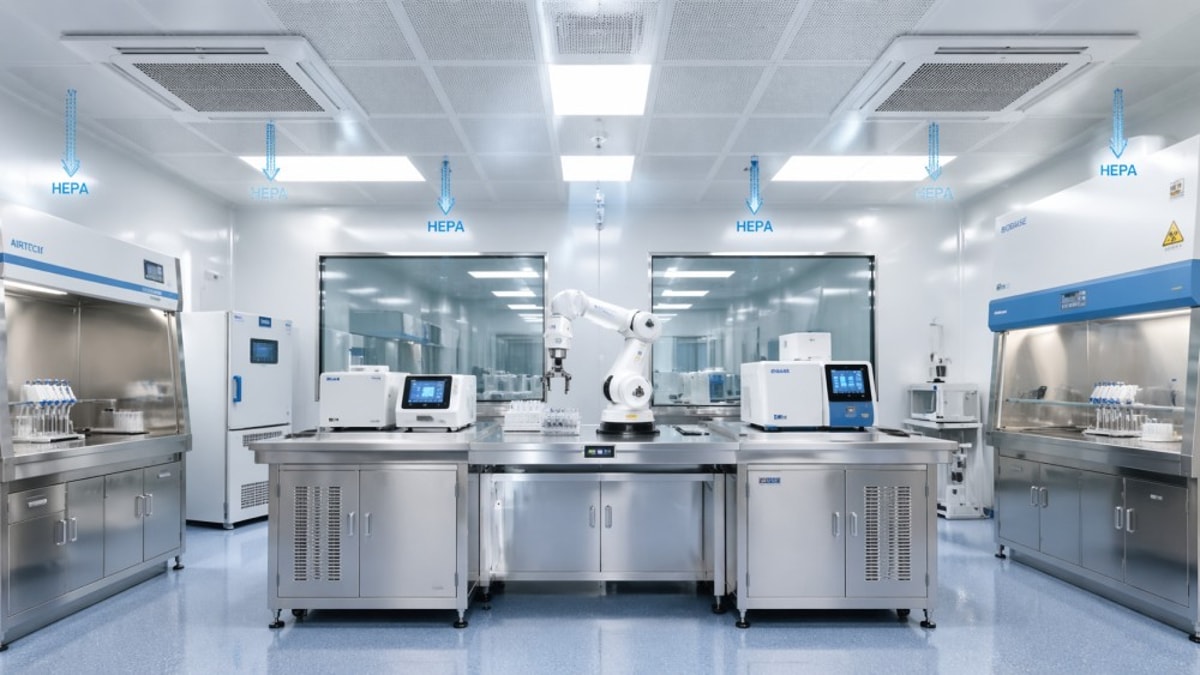
In automated labs, GMP compliance is shaped by the interaction of software, robotics, controlled environments, utilities, and people. A single gap in one layer can compromise the whole chain. For example, a liquid handling robot may operate within ±1% pipetting accuracy, but if the cleanroom pressure cascade drifts outside the validated range or audit trails are incomplete, the process still falls out of compliance.
This is why regulated facilities increasingly treat automation as part of the quality system rather than a productivity add-on. Equipment such as biosafety cabinets, Class III biosafety cabinets, laminar flow units, environmental monitoring devices, and automated sample handlers must be qualified together with workflows, user permissions, and cleaning procedures. In practice, this often means 3 coordinated layers: facility controls, process controls, and digital controls.
Across multi-industry environments, the biggest risks usually appear during scale-up. A lab may pass early pilot work with 2 or 3 integrated instruments, then encounter repeated deviations when the system expands to 10 or more connected assets. Common failure points include unverified interface logic, insufficient segregation of clean and dirty flows, delayed HEPA replacement, and inconsistent alarm handling between local devices and central monitoring platforms.
For decision-makers, the 2026 challenge is therefore broader than meeting a checklist. It is about building an operation that remains inspection-ready during routine use, maintenance shutdowns, software updates, and process transfer. That requires measurable control limits, clearly assigned responsibilities, and documentation that reflects actual use conditions rather than ideal assumptions.
Core Control Domains in an Automated GMP Lab
- Environmental control: ISO-classified spaces, airflow velocity, pressure differential, temperature, and humidity stability.
- Equipment control: calibration intervals, preventive maintenance frequency, sensor drift limits, and equipment qualification status.
- Data control: audit trails, user access levels, time-stamped records, backup cycles, and change control logs.
- Process control: validated methods, robotic task sequences, sample traceability, cleaning verification, and deviation closure workflow.
Where Compliance Pressure Is Increasing in 2026
Three trends are accelerating compliance pressure. First, automation density is rising, with many labs integrating 5 to 15 instruments into a single digital workflow. Second, data expectations are higher, especially where electronic records and remote review are involved. Third, biosafety and contamination control requirements are becoming more tightly linked to engineering performance, not just operator behavior.
This means buyers should no longer separate equipment purchasing from validation planning. If a hepa filter manufacturer cannot provide stable filter performance data, change-out guidance, and compatibility with airflow qualification protocols, the risk extends beyond maintenance cost and into audit exposure.
Facility and Equipment Design Choices That Directly Affect Compliance
Automated lab compliance starts with physical design. Even a high-accuracy automated platform can underperform if room zoning, personnel flow, utility routing, or containment hardware are poorly selected. In regulated environments, the design stage typically locks in 60% to 70% of later compliance performance because airflow paths, cleaning access, service clearances, and segregation logic become difficult and expensive to change after installation.
Cleanroom engineering should match both the process and the automation footprint. A compact diagnostic automation cell may work in an ISO 7 support environment with ISO 5 local protection inside a laminar flow unit, while higher-risk biologics or potent compound handling may require additional containment, pass-through controls, and negative pressure staging. Equipment selection must reflect the process hazard, not only throughput goals.
For high-containment work, biosafety cabinets and Class III biosafety cabinets are not interchangeable decisions. Class II systems may fit open handling steps with defined operator barriers and validated airflow, while Class III systems are used where maximum separation is required. Procurement teams should evaluate containment class, access ergonomics, decontamination method, transfer interface, and routine certification burden over a 12- to 36-month operating period.
HEPA filtration is another recurring weak point. In many automated labs, filters are viewed as a standard consumable rather than a compliance-critical component. In reality, filter efficiency, seal integrity, pressure drop trend, and replacement procedure can influence airflow uniformity, recovery time, and contamination risk. A trusted hepa filter manufacturer should support not only supply continuity, but also qualification compatibility and traceable performance documentation.
Design Priorities for Different Automated Lab Profiles
The table below compares design priorities often seen across automated laboratories operating under GMP or adjacent regulatory expectations.
The key takeaway is that the right design depends on contamination route, operator interaction, and recovery strategy. Facilities that start by defining these three items usually shorten redesign cycles by 2 to 4 weeks during detailed engineering and reduce qualification rework later.
Common Selection Mistakes
- Choosing automation based only on throughput, without accounting for cleaning validation access or glove-port ergonomics.
- Using generic filtration replacement plans instead of differential pressure trend review every 1 to 3 months.
- Ignoring service clearance needs, which can force unplanned shutdowns of adjacent controlled zones during maintenance.
- Treating cleanroom panels, pass boxes, and monitoring points as construction details rather than GMP control elements.
Validation, Documentation, and Data Integrity in Automated Operations
Once the facility and equipment are in place, compliance depends on proof. In automated labs, that proof comes from qualification records, validated workflows, calibration status, access control logs, training records, alarm histories, and periodic review practices. The standard IQ, OQ, and PQ structure still applies, but the scope is now broader because automation creates more interfaces, more software dependencies, and more hidden failure modes.
A practical validation plan usually includes 4 layers: facility qualification, equipment qualification, computerized system verification, and process performance confirmation. For example, a robotic sample preparation line may require airflow verification in the surrounding controlled space, pipetting accuracy checks at multiple volumes, user role challenge tests, and a defined number of repeat runs such as 3 consecutive batches with pre-set acceptance criteria.
Data integrity deserves special attention in 2026. Automated laboratories produce large volumes of timestamped events, instrument outputs, alarms, and exception records. If records can be altered without traceability, if time synchronization is inconsistent, or if backup testing is only theoretical, the quality system becomes vulnerable. Operators and QA reviewers should know where raw data sits, who can edit methods, how electronic signatures are applied, and how long data remains accessible for review.
Documentation quality also influences procurement success. When vendors cannot clearly define maintenance intervals, spare part replacement windows, software update control, or calibration reference points, the buyer inherits future ambiguity. For B2B projects, this is one reason technical benchmarking and documentation review should happen before final purchase approval, not after commissioning begins.
Typical Qualification and Documentation Map
The following matrix helps project teams assign evidence requirements by stage and avoid late-document gaps during commissioning and audit preparation.
Teams that create this documentation map before factory acceptance testing often reduce post-installation clarifications by 20% to 30%. More importantly, they move faster when regulators or internal auditors ask for evidence linked to a specific deviation or system change.
Minimum Data Integrity Checks for Automated Labs
- Review role-based access and confirm no shared administrator accounts remain active.
- Verify audit trails are enabled, readable, and retained for the required review period.
- Test backup and restore with at least 1 real recovery exercise, not only policy review.
- Confirm time synchronization across instruments, servers, and environmental monitoring devices.
How to Evaluate Suppliers, Components, and Procurement Risk
For procurement and commercial assessment teams, GMP compliance risk often begins before the purchase order is issued. The critical question is not simply whether a supplier can deliver a robot, cabinet, or cleanroom component on time. It is whether the supplier can support the documentation, performance consistency, spare parts availability, and technical responsiveness needed over the full service life, which commonly spans 5 to 10 years.
This is especially important for integrated environments involving biosafety cabinets, laminar flow units, environmental sensors, UHP gas delivery, and automation software from multiple vendors. If component interfaces are weak or responsibilities are unclear, deviations tend to become contractual disputes rather than controlled technical events. A strong procurement framework therefore evaluates supplier capability across compliance, engineering, service, and lifecycle support.
Lead time also matters. Standard controlled environment equipment may ship in 4 to 8 weeks, but customized containment systems, Class III biosafety cabinets, or application-specific automation enclosures can require 10 to 20 weeks depending on testing scope and regional certification needs. Buyers should align purchasing schedules with FAT, SAT, installation, and requalification planning instead of using simple delivery dates as the main milestone.
For high-purity airflow systems, choosing a qualified hepa filter manufacturer should include performance stability, traceability of materials, replacement support, and compatibility with the site’s validation methods. Price-only decisions can increase long-term cost when filter life shortens, pressure drop rises too quickly, or leak test support is weak.
Procurement Evaluation Checklist
The table below can be used by purchasing, engineering, and QA teams to screen suppliers before final technical approval.
A practical rule is to score suppliers across at least 4 dimensions: technical fit, compliance documentation, service responsiveness, and total lifecycle cost. This gives distributors, agents, and end users a more durable basis for comparison than initial quotation value alone.
Red Flags During Vendor Assessment
- No clear calibration schedule or unclear statement of measurement uncertainty.
- No defined process for software patch review, rollback, or change documentation.
- Limited spare parts visibility beyond the first 12 months of operation.
- No field support plan for filter testing, airflow balancing, or containment recertification.
Implementation Roadmap, Maintenance Strategy, and FAQ for 2026 Projects
A compliant automated lab is built in phases, not in one handover event. Most successful projects move through 5 steps: user requirement definition, design review, procurement and FAT, installation with qualification, and operational monitoring. Depending on system complexity, this can take 8 to 24 weeks for a contained automation cell and longer for multi-room controlled environment projects.
Maintenance planning should begin before go-live. Preventive maintenance intervals for robotics, airflow devices, particle counters, and biosafety cabinets should be aligned with production schedules and contamination risk. Many facilities use quarterly checks for critical sensors, semiannual recertification planning for airflow devices where applicable, and annual review of alarm logic, access rights, and backup recovery performance.
Project managers should also define deviation ownership early. When automation, cleanroom engineering, and biosafety systems are delivered by separate parties, each event needs an escalation route. Without that, minor issues such as door interlock drift, pressure instability, or slow filter recovery can remain unresolved for weeks and then appear as repeat audit observations.
For distributors and solution partners, the strongest value proposition in 2026 is no longer simple equipment availability. It is the ability to support benchmark-based selection, qualification readiness, component compatibility, and post-installation control. That is where technical intelligence platforms and structured benchmarking support improve project certainty for both buyers and suppliers.
Recommended Implementation Sequence
- Define the process, contamination route, and target operating mode before selecting hardware.
- Map facility, automation, and digital control interfaces in one review set.
- Approve documentation deliverables before shipment, including FAT scope and maintenance package.
- Run qualification with predefined acceptance limits, then train users by role.
- Establish routine review cycles for alarms, deviations, cleaning records, and spare parts status.
FAQ: Practical Questions Buyers and Operators Ask
How long does GMP-ready deployment usually take for an automated lab?
For a relatively standard automation setup in an existing controlled area, deployment may take 8 to 12 weeks including delivery, installation, and qualification. For custom containment, integrated cleanroom modifications, or multi-vendor systems, 16 to 24 weeks is more realistic because FAT, interface testing, and documentation review require additional time.
What should be checked when selecting a biosafety cabinet or laminar flow unit?
Review containment class, airflow pattern, access configuration, decontamination method, service access, filter replacement procedure, and recertification requirements. Also confirm whether the equipment must operate with robotic arms, pass-through ports, or closed transfer components, since these factors can alter airflow behavior and maintenance burden.
How often should HEPA filters and airflow performance be reviewed?
There is no single interval for every site, but many facilities review differential pressure trends monthly or quarterly and align full performance checks with their qualification schedule. Earlier review is advisable if pressure drop changes rapidly, particle levels trend upward, or the process involves high contamination sensitivity.
What is the most common compliance gap after automation startup?
A frequent issue is mismatch between validated operation and real use. Examples include informal user access sharing, delayed calibration, unreviewed software changes, or cleaning steps that operators adapt without updating SOPs. These are controllable problems, but only if the site treats automation as part of the quality system from day one.
Automated labs in 2026 must perform under stricter expectations for traceability, contamination control, engineering reliability, and lifecycle documentation. Facilities that connect GMP compliance to cleanroom engineering, biosafety infrastructure, filtration quality, automation validation, and supplier screening are far better positioned to maintain stable operations and pass audits with fewer surprises.
G-LCE supports this decision process by helping organizations benchmark controlled environment hardware, biosafety systems, UHP delivery platforms, and precision automation assets against practical regulatory and technical requirements. If you are planning a new automated lab, upgrading an existing GMP space, or evaluating suppliers across high-purity and high-containment applications, contact us to get a tailored solution review, compare key system options, and explore the next step for audit-ready laboratory performance.
- sensors
- cement
- distributors
- semiconductor
- hepa filter manufacturer
- Cleanroom Engineering
- Controlled Environments
- Biosafety Cabinets
- Laboratory Automation
- Precision Instrumentation
- GMP Compliance
- Laminar Flow Units
- Class III Biosafety Cabinets
- Regulatory Frameworks
- Technical Benchmarking
- Security Engineering
Related News
- 2026 Guide to GMP Compliance in Automated LabsApr 29, 2026GMP Compliance in automated labs: explore Biosafety Cabinets, Class III Biosafety Cabinets, Cleanroom Engineering, HEPA filtration, and Laboratory Automation strategies for audit-ready performance in 2026.
- Which Regulatory Frameworks Slow Equipment ApprovalApr 29, 2026Regulatory Frameworks shape approval delays for Biosafety Cabinets, GMP Compliance, Laboratory Automation, and Cleanroom Engineering. Learn what slows reviews and how smarter supplier choices accelerate approval.
- Regulatory Frameworks That Matter in Lab DesignApr 29, 2026Regulatory Frameworks guide Biosafety Cabinets, GMP Compliance, Cleanroom Engineering, and Laboratory Automation in smarter lab design. Discover how to reduce risk and build audit-ready facilities.
- GMP Compliance Checklist for New Cleanroom BuildsApr 29, 2026GMP Compliance checklist for new cleanroom builds: compare Biosafety Cabinets, Laminar Flow Units, Laboratory Automation, and HEPA filter manufacturer options to reduce risk.