
Weekly Insights
Stay ahead with our curated technology reports delivered every Monday.
Laboratory automation can raise throughput, reduce manual error, and improve repeatability—but the risks that matter most rarely come from the robot alone. They usually emerge at the interfaces: workflow design, data integrity, cleanroom fit, instrument calibration, biosafety controls, software validation, and change management. If these issues are not addressed early, organizations often pay later through failed scale-up, GMP deviations, audit findings, downtime, contaminated runs, or expensive retrofits. For teams evaluating or operating automated lab environments, the practical question is not whether to automate, but which risks must be fixed before they become systemic.
Which laboratory automation risks should be fixed first?
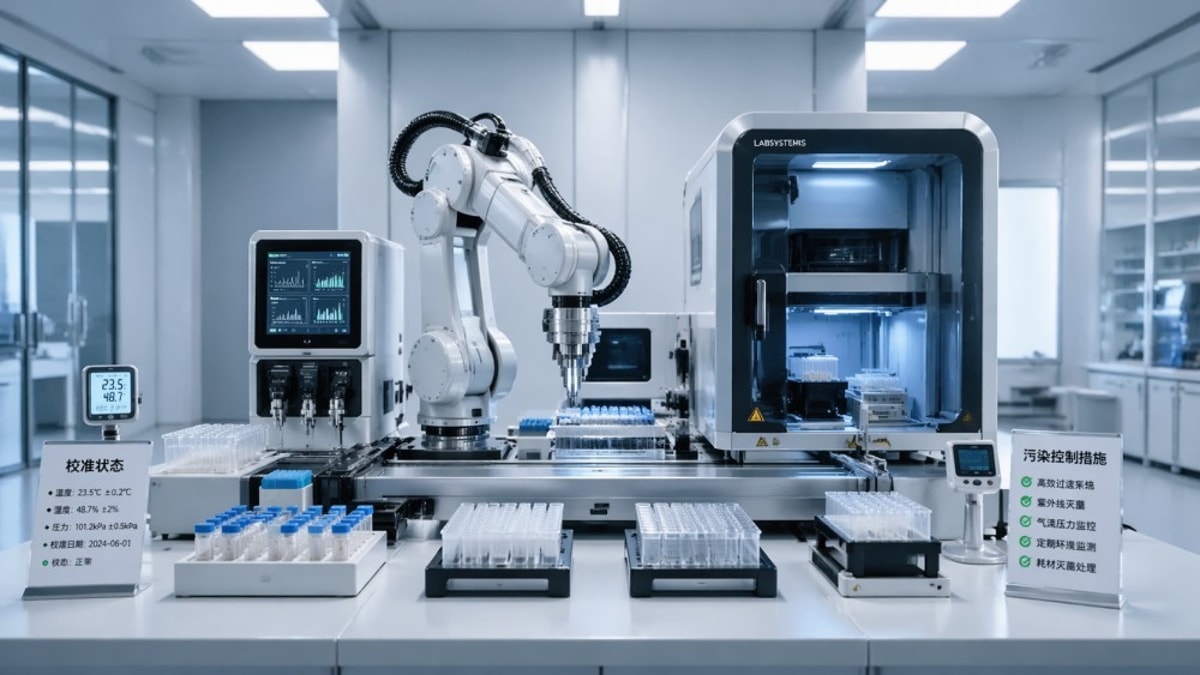
The highest-priority risks are the ones that silently affect compliance, sample integrity, operator safety, and long-term operability. In most laboratory automation projects, early intervention should focus on six areas:
- Workflow mismatch: automation logic does not reflect real laboratory practice, exceptions, or sample variability.
- Data integrity gaps: missing audit trails, poor instrument-to-software integration, and weak access control.
- Precision and calibration drift: robotic handling, pipetting, dispensing, sensing, or positioning errors that worsen over time.
- Environmental and contamination control failures: automation deployed without proper cleanroom engineering, airflow compatibility, or containment planning.
- Regulatory misalignment: systems implemented without sufficient validation for GMP, ISO, biosafety, or internal quality requirements.
- Maintenance and lifecycle blind spots: teams underestimate spare parts, software patching, service response, or requalification effort.
If a buyer, lab manager, or technical evaluator fixes these six areas early, the automation program is far more likely to deliver stable ROI instead of creating hidden operational debt.
Why automation projects fail even when the equipment is technically advanced
Many organizations assume that selecting a high-end automation platform is the hard part. In reality, failure often begins after procurement—when the system enters a live environment with real operators, regulated workflows, and tightly controlled infrastructure.
A laboratory automation solution may look excellent in a vendor demo but still fail in production because:
- Sample types vary more than expected.
- Upstream and downstream instruments are not fully compatible.
- Exception handling was never mapped.
- Software architecture does not support compliant records.
- Airflow, vibration, temperature, humidity, or containment conditions affect performance.
- Operators bypass the intended process because the automated workflow is too rigid.
This matters especially in controlled environments where automation is tied to biosafety cabinets, clean benches, isolators, ultra-high purity utilities, or sensitive analytical instrumentation. In such settings, automation is not a standalone purchase. It becomes part of a larger validated system.
Workflow risk is usually bigger than hardware risk
One of the most common early mistakes is automating a process before fully understanding it. If a workflow contains hidden variability, poor handoffs, inconsistent labeling, or unclear decision points, automation can scale the problem rather than solve it.
Teams should review questions such as:
- Where do samples queue, wait, or degrade?
- Which steps require operator judgment?
- What happens when volume, viscosity, container type, or timing changes?
- How are failed runs, exceptions, and rework handled?
- Which manual controls are currently preventing serious quality issues?
For project managers and engineering leads, the key lesson is simple: process mapping should happen before configuration, not after installation. A well-defined workflow architecture reduces reprogramming, retraining, and validation delays.
Data integrity and software validation are not secondary issues
In regulated or quality-sensitive laboratories, data integrity is a core business risk. If automation software, middleware, and connected instruments do not create complete, secure, and traceable records, the organization may face audit observations, batch release issues, or credibility loss.
Early controls should include:
- Role-based access and user authentication
- Audit trails for method changes, run edits, and approvals
- Time-synchronized records across connected systems
- Secure data transfer between instruments, LIMS, MES, or SCADA layers
- Backup, disaster recovery, and cybersecurity planning
- Defined validation protocol for software updates and configuration changes
For procurement teams and decision-makers, this means software architecture deserves the same scrutiny as mechanical performance. A robot with excellent throughput but weak compliance support may create more cost than value.
Precision instrumentation risk grows slowly, then becomes expensive
Automation platforms depend on stable, repeatable performance from motion systems, sensors, pipetting modules, grippers, handlers, readers, and connected analytical devices. Minor drift may not be obvious at first, but over weeks or months it can reduce confidence in assay results, create batch inconsistency, or trigger hidden waste.
Technical evaluation teams should examine:
- Calibration intervals and traceability
- Tolerance limits under actual operating conditions
- Sensitivity to vibration, temperature, and humidity
- Preventive maintenance requirements
- Mean time between failure and service support capability
- Qualification requirements after repair, relocation, or software change
This is particularly important where laboratory automation and precision instrumentation interact inside high-performance environments. A technically accurate system on paper may still underperform if installation conditions are unstable or if support teams cannot maintain calibration discipline.
Contamination control, cleanroom fit, and biosafety integration must be planned early
In many advanced laboratories, automation risk is inseparable from environmental control. Robots, enclosures, and material-handling systems can disrupt airflow patterns, create particle load, complicate cleaning, or interfere with containment design.
Examples of early-stage problems include:
- Robotic movement disturbing laminar airflow in a cleanroom or clean bench
- Equipment geometry creating inaccessible cleaning zones
- Heat output affecting environmental stability
- Improper placement near biosafety cabinets or containment barriers
- Utility routing that compromises pressure cascades or service access
For quality, EHS, and facility stakeholders, automation should be reviewed together with cleanroom engineering, biosafety requirements, and utility design. Retrofitting containment or environmental compliance after installation is often far more expensive than planning correctly at the start.
Regulatory risk often starts before commissioning
Organizations in GMP, high-containment, pharmaceutical, biotech, diagnostics, semiconductor, and advanced research settings cannot treat automation as a simple equipment deployment. Regulatory and quality expectations influence user requirements, design review, FAT/SAT, IQ/OQ/PQ, change control, and ongoing requalification.
The early warning sign is when teams ask compliance questions too late. By that stage, the system architecture may already be difficult to validate.
To reduce this risk, organizations should define early:
- User requirement specifications linked to intended use
- Critical quality attributes and process control points
- Applicable standards and internal validation expectations
- Alarm handling, deviation management, and electronic record requirements
- Responsibilities between vendor, integrator, quality unit, and site engineering
This approach helps both operators and executive stakeholders because it reduces the chance of delayed approval, duplicated testing, or failed inspections.
How to evaluate laboratory automation risk before purchase or rollout
A useful evaluation framework should go beyond feature comparison. Buyers and project owners should assess whether the solution is operationally robust, maintainable, and fit for the real environment.
Ask these practical questions:
- Does the automated workflow reflect real operating variability?
- Can the system maintain data integrity across all connected platforms?
- Will the equipment perform reliably in the intended cleanroom, containment, or utility environment?
- Are calibration, service, spare parts, and support realistically available?
- Can the system be validated and requalified without excessive burden?
- What failure modes appear during exceptions, not just normal runs?
- What is the true lifecycle cost beyond capital expenditure?
For commercial evaluators and enterprise decision-makers, these questions improve investment decisions because they connect technical capability with compliance, uptime, and total cost of ownership.
What early fixes usually deliver the highest return
Not every risk requires a major redesign. Some of the most valuable corrective actions are relatively early and practical:
- Standardize sample and consumable formats before automation scaling.
- Map exception handling and manual intervention paths.
- Define environmental requirements with facilities and EHS teams.
- Review software validation and cybersecurity architecture before purchase approval.
- Build preventive maintenance and calibration plans into the project scope.
- Run pilot studies using real samples, real users, and realistic throughput assumptions.
- Establish change control rules for methods, scripts, and hardware modifications.
These actions help reduce surprises during commissioning and protect long-term system performance.
Conclusion: early risk control is what makes automation scalable
The real risk in laboratory automation is not simply equipment failure. It is the accumulation of small, ignored weaknesses across workflow design, compliance strategy, software control, environmental integration, and lifecycle support. Left unresolved, these issues can erode quality, delay operations, and weaken the business case for automation.
The strongest automation programs address risk early—before procurement is locked, before validation is delayed, and before operators are forced to work around the system. For laboratories operating in controlled, high-purity, or biosafety-sensitive environments, this early discipline is what turns automation from a promising technology into a reliable, compliant, and scalable asset.
Related News
- Laboratory Automation Risks You Should Fix EarlyApr 29, 2026Laboratory Automation risks to fix early: GMP Compliance, Biosafety Cabinets, Cleanroom Engineering, Security Engineering, and Precision Instrumentation—reduce audit gaps, contamination, and costly downtime.
- Is Laboratory Automation Worth It for Small LabsApr 29, 2026Laboratory Automation for small labs: learn when it delivers ROI, GMP Compliance, better Biosafety Cabinets workflows, Precision Instrumentation gains, and cleaner Regulatory Frameworks.