Weekly Insights
Stay ahead with our curated technology reports delivered every Monday.
From Cleanroom Engineering and Biosafety Cabinets to Laboratory Automation and Precision Instrumentation, effective lab design is shaped by Regulatory Frameworks that directly impact GMP Compliance, Security Engineering, and long-term operational performance. Whether evaluating Class III Biosafety Cabinets, Laminar Flow Units, or selecting a qualified HEPA filter manufacturer, decision-makers must align technical choices with global standards to reduce risk, ensure safety, and support scalable, audit-ready facilities.
Why regulatory frameworks sit at the center of modern lab design
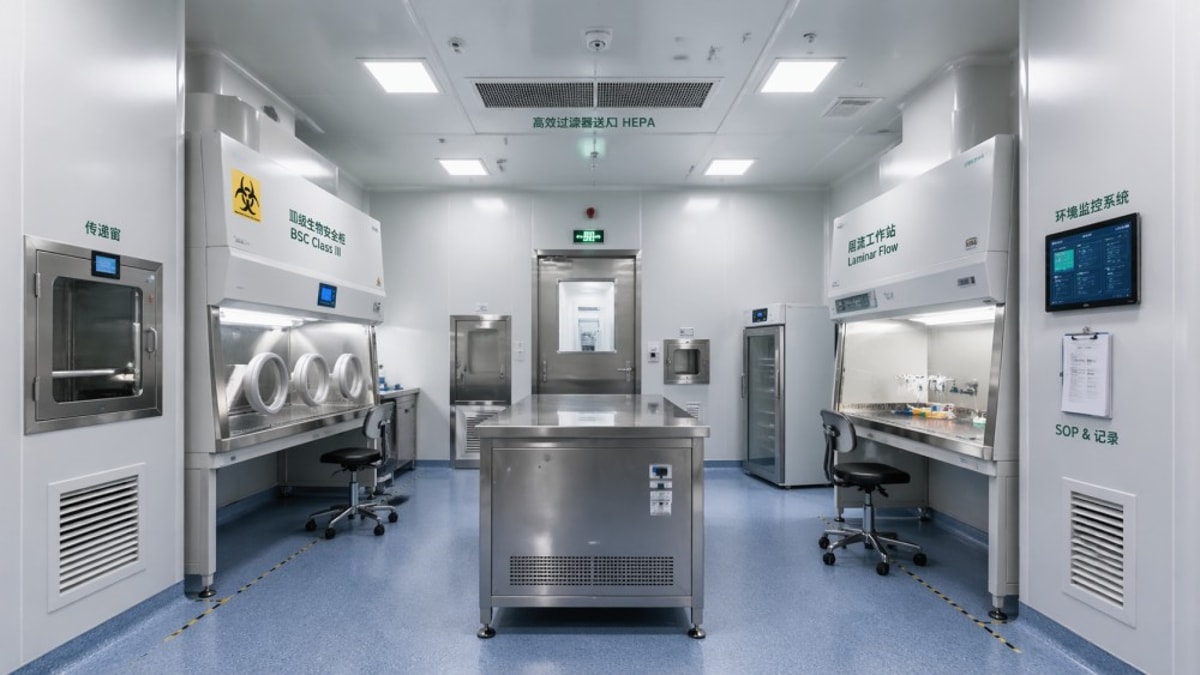
In advanced laboratories, regulation is not a final checkpoint added after construction. It is a design input that influences zoning, airflow logic, pressure cascades, material choices, utilities routing, automation integration, and validation planning from day one. For operators, this means safer workflows. For technical evaluators, it means measurable design criteria. For procurement teams, it means fewer specification gaps during tendering and commissioning.
Across pharmaceuticals, biotechnology, semiconductor fabrication, medical device production, research institutes, and high-containment facilities, the same pattern appears: if the regulatory framework is mapped late, projects face change orders, delayed qualification, and rework in critical systems. A 2–4 week redesign of airflow or utility routing can expand into months when cleanroom panels, ducting, and pass-through systems have already been installed.
This is where G-LCE brings value. By benchmarking cleanroom engineering, biosafety protection, UHP gas systems, laboratory automation, and effluent treatment against globally recognized standards such as ISO 14644, NSF/ANSI 49, and SEMI S2, G-LCE helps decision-makers connect equipment performance with compliance obligations. That is especially useful when a facility must satisfy more than one framework at the same time, such as GMP requirements plus biosafety controls or ISO cleanliness plus process safety constraints.
A practical lab design program usually moves through 3 core stages: requirement definition, engineering translation, and qualification readiness. If any one of these stages lacks regulatory interpretation, the project may still look complete on paper but remain weak during audit, operator training, or expansion. Good design is therefore not only technically correct; it must also be defensible under inspection and sustainable over a 5–10 year operational horizon.
Which frameworks typically affect design decisions?
The most influential frameworks vary by use case, but several categories repeatedly shape high-performance lab environments. GMP affects contamination control, material flow, documentation, and validation. Biosafety levels influence containment barriers, cabinet selection, room pressure strategy, decontamination approach, and access control. ISO standards guide airborne cleanliness, testing methodology, and environmental classification. In semiconductor and microelectronics contexts, purity and safety expectations extend into gas delivery, vibration control, and particle discipline.
- GMP-driven spaces usually require clear separation of personnel, product, waste, and cleaning flows, plus documented qualification steps.
- BSL-3 or BSL-4 relevant environments demand higher containment discipline, pressure differentials, sealed penetrations, and validated decontamination procedures.
- ISO-classified clean environments place strong emphasis on particulate control, filtration integrity, recovery performance, and routine monitoring frequency.
- SEMI-related environments often require close attention to equipment safety interfaces, hazardous gas handling, and ultra-high purity delivery reliability.
How standards translate into physical design choices
A regulatory framework matters only when it is translated into dimensions, specifications, tolerances, and procedures. In lab design, that translation usually appears in room adjacency, HVAC architecture, enclosure integrity, filtration efficiency, utility purity, cabinet configuration, monitoring points, and cleaning compatibility. Technical teams should therefore ask not just “Which standard applies?” but “What exact design consequence does that standard create?”
For example, ISO-class cleanroom planning may drive decisions on air change rates, HEPA or ULPA filter strategy, return air placement, and gowning transitions. Biosafety planning may require airtight dampers, pressure alarms, bag-in/bag-out filtration access, dunk tanks, or pass-through autoclaves. GMP-oriented facilities often need smooth, cleanable finishes, hidden services minimization, accessible maintenance zones, and material/personnel segregation to support controlled operations and inspection readiness.
Automation adds another layer. A liquid handling robot or precision analytical platform may reduce human intervention, but it can also add heat load, vibration sensitivity, software validation obligations, and maintenance access requirements. If those factors are not coordinated during concept design, the result may be acceptable equipment performance in isolation but poor environmental stability in continuous operation over 16–24 hours per day.
The table below shows how major regulatory considerations often map into design actions and procurement checkpoints. It can help project managers, safety leaders, and sourcing teams align specifications before RFQ release.
The key lesson is that standards should be visible in the specification matrix, not buried in general notes. If a bid package lists “high-grade cleanroom” without defining classification method, recovery expectations, leak-testing approach, or documentation scope, suppliers will interpret quality differently. That creates commercial risk as well as compliance risk.
Three areas most often underestimated
1. Serviceability under containment
Many designs focus on day-one performance and ignore filter replacement, calibration access, and parts maintenance under real containment conditions. A cabinet or air handling unit that is easy to buy but difficult to service can create recurring shutdown windows of 6–12 hours or require additional safety procedures every quarter.
2. Utility purity versus equipment sensitivity
In UHP gas and chemical delivery systems, sub-ppb expectations are not marketing language. They affect valve selection, orbital welding quality, purge sequencing, and monitoring strategy. A poorly specified manifold can undermine analytical precision or process repeatability even when the room itself passes cleanliness testing.
3. Expansion readiness
Facilities frequently outgrow their original design in 18–36 months. If no spare capacity is planned for airflow, exhaust, automation interfaces, or effluent treatment, scale-up becomes expensive. Forward-looking lab design often reserves capacity bands for utilities, access pathways, and control integration, even when the first installation phase is intentionally modest.
What different stakeholders should evaluate before procurement
Regulatory frameworks affect each stakeholder differently. Operators care about workflow safety and ergonomic burden. Quality and safety managers care about deviations, monitoring, and audit traceability. Procurement teams focus on bid comparability, total installed cost, and documentation scope. Executives want risk reduction, uptime, and scalable capital efficiency. A useful procurement process must combine all of these views rather than treat compliance as a technical side note.
A strong RFQ for cleanroom systems, biosafety cabinets, or lab automation should define at least 5 evaluation dimensions: applicable standards, required environmental performance, documentation package, installation constraints, and lifecycle support. In high-spec projects, a sixth dimension is often digital integration, including alarm outputs, data logging, and building management compatibility.
G-LCE’s cross-pillar perspective is useful here because a compliant lab is not built from isolated products. A Class III Biosafety Cabinet affects room exhaust strategy. A laminar flow unit affects cleanliness mapping and gowning discipline. A HEPA filter manufacturer affects testability, replacement planning, and supply continuity. Procurement quality rises when these interdependencies are reviewed together rather than item by item.
The comparison table below helps different buyer roles prioritize what to verify before approval. It is especially relevant when multiple suppliers claim compliance but provide very different levels of evidence, support, or engineering depth.
This framework also helps distributors and channel partners. When reselling complex lab infrastructure, it is not enough to pass along a brochure. Partners who can translate compliance language into application fit, installation limits, and document scope are more likely to win technically demanding accounts.
A practical 4-step procurement checklist
- Define the governing framework first: GMP, biosafety, ISO cleanliness, equipment safety, or a combination of 2–3 sets of requirements.
- Convert compliance into measurable specifications such as room pressure logic, filter access method, utility purity, testing intervals, and documentation deliverables.
- Compare suppliers on installed performance and lifecycle support, not only purchase price. Include commissioning, training, and spare parts planning.
- Run a gap review before PO release. This step often prevents overlooked items such as control integration, bag-in/bag-out access, calibration tools, or site readiness dependencies.
Common mistakes, timing risks, and implementation advice
One of the most common mistakes in lab design is treating standards as paperwork rather than engineering logic. The second is assuming that compliance for one subsystem guarantees compliance for the full environment. A certified cabinet does not automatically create a compliant containment room. A high-efficiency filter does not guarantee ISO performance if airflow distribution, leakage control, and recovery behavior are weak.
Another frequent error is unrealistic scheduling. Even when equipment lead times are acceptable, qualification and integration can become the bottleneck. For many specialized systems, a practical project timeline includes 2–6 weeks for final technical clarification, 6–14 weeks for manufacturing or configuration depending on complexity, and additional time for site preparation, SAT, and operator training. Projects with high containment or custom automation often run longer.
Implementation quality improves when teams define acceptance in advance. That means not only saying “system must comply,” but also identifying which tests, which documents, and which training records will be reviewed before handover. In regulated environments, vague acceptance criteria often shift cost and responsibility disputes into the final project phase, precisely when schedule pressure is highest.
The most resilient projects also plan for routine operation. A lab designed for excellence on day one but without a maintenance strategy may see performance drift after 6–12 months. Pressure alarms need calibration. Filters require periodic integrity checks. Gas delivery systems need disciplined purge and service protocols. Automation platforms need preventive maintenance windows coordinated with cleanliness and containment rules.
FAQ: key questions buyers and project teams ask
How do we choose between a general clean environment approach and a high-containment approach?
Start with the risk profile of the process, not the equipment catalog. If the main challenge is particulate control, ISO-class cleanroom logic may dominate. If agent containment and personnel protection drive the project, biosafety and pressure control become central. Many facilities need a hybrid approach, especially when sterile, hazardous, and automated processes coexist within one operational chain.
What should we ask a HEPA filter manufacturer or cleanroom supplier before purchase?
Ask about filter integrity test access, change-out method, compatibility with your housing design, documentation package, and expected replacement planning under your duty cycle. Also verify whether the supplier can support installed-system performance, not just component delivery. In regulated projects, interface details often matter as much as filter media specifications.
How long does qualification usually take?
There is no universal number, but a realistic range for straightforward systems may be several days to 2 weeks after installation readiness, while more complex facilities with containment, automation, and integrated monitoring can require phased qualification over several weeks. The deciding factors are documentation completeness, site readiness, utility stability, and the number of interfaces under test.
Is lowest upfront price a reasonable strategy in regulated lab design?
Only if the scope is genuinely equivalent, which is often not the case. Lower quotes may exclude FAT participation, commissioning support, validation documents, or spare parts. In highly controlled environments, the operational cost of downtime, failed testing, or retrofit work can exceed the original purchase difference. Total installed value is a better metric than entry price alone.
Why consult G-LCE when compliance, performance, and procurement must align
G-LCE supports organizations that cannot afford ambiguity in lab design. When a project spans cleanroom engineering, biosafety cabinets, UHP gas systems, laboratory automation, and effluent treatment, the main challenge is usually not finding products. It is building a coherent compliance path across interconnected systems. That is where structured benchmarking and regulatory interpretation become commercially and operationally valuable.
For CTOs, lab directors, procurement officers, quality leaders, engineering managers, and channel partners, G-LCE helps convert technical complexity into actionable decision criteria. Instead of evaluating isolated specifications, teams can compare design options against the standards, operating risks, and lifecycle requirements that actually shape performance in sensitive production and research environments.
If you are planning a new facility, upgrading a controlled environment, or validating a sourcing strategy, the most productive next step is a targeted technical review. Typical consultation topics include parameter confirmation, product selection, delivery timeline assessment, custom solution definition, applicable certification requirements, documentation scope, sample or specification review, and quotation alignment across multiple suppliers.
Contact G-LCE to discuss your lab design framework before final specification lock. A focused review at the concept or RFQ stage can help clarify compliance priorities, identify hidden integration risks, compare alternatives on a like-for-like basis, and support a more reliable path from design intent to qualified operation.
- manufacturing
- cement
- distributors
- electronics
- semiconductor
- hepa filter manufacturer
- Cleanroom Engineering
- Controlled Environments
- Biosafety Cabinets
- Chemical Delivery Systems
- Laboratory Automation
- Precision Instrumentation
- GMP Compliance
- Laminar Flow Units
- Class III Biosafety Cabinets
- Regulatory Frameworks
- Security Engineering
Related News
- 2026 Guide to GMP Compliance in Automated LabsApr 29, 2026GMP Compliance in automated labs: explore Biosafety Cabinets, Class III Biosafety Cabinets, Cleanroom Engineering, HEPA filtration, and Laboratory Automation strategies for audit-ready performance in 2026.
- Which Regulatory Frameworks Slow Equipment ApprovalApr 29, 2026Regulatory Frameworks shape approval delays for Biosafety Cabinets, GMP Compliance, Laboratory Automation, and Cleanroom Engineering. Learn what slows reviews and how smarter supplier choices accelerate approval.
- Regulatory Frameworks That Matter in Lab DesignApr 29, 2026Regulatory Frameworks guide Biosafety Cabinets, GMP Compliance, Cleanroom Engineering, and Laboratory Automation in smarter lab design. Discover how to reduce risk and build audit-ready facilities.
- GMP Compliance Checklist for New Cleanroom BuildsApr 29, 2026GMP Compliance checklist for new cleanroom builds: compare Biosafety Cabinets, Laminar Flow Units, Laboratory Automation, and HEPA filter manufacturer options to reduce risk.