
Weekly Insights
Stay ahead with our curated technology reports delivered every Monday.
For teams operating in high-containment labs, Class III Biosafety Cabinets are more than enclosed workstations—they are critical assets in Security Engineering, GMP Compliance, and modern Regulatory Frameworks. This guide outlines the key specification checks buyers, operators, and technical evaluators should review, while also connecting cabinet performance with Cleanroom Engineering, Laboratory Automation, Precision Instrumentation, and supplier selection, including the role of a reliable HEPA filter manufacturer.
In B2B procurement, a Class III Biosafety Cabinet is rarely an isolated purchase. It affects containment strategy, room pressure cascade, decontamination workflow, utility planning, operator training, and long-term service costs. For laboratory directors, biosafety officers, procurement teams, distributors, and project managers, the key question is not only whether a cabinet meets baseline containment expectations, but whether its full specification profile fits the facility, the application, and the validation path.
Because these cabinets are used in high-risk environments such as BSL-3 and BSL-4 operations, small specification gaps can become major operational issues. Glove port geometry, transfer chamber design, filtration arrangement, airflow performance, material compatibility, and leak test accessibility all influence safety, uptime, and compliance. A disciplined review of specifications before purchase reduces redesign risk, commissioning delays, and lifecycle cost escalation.
Containment Fundamentals and Why Specification Details Matter
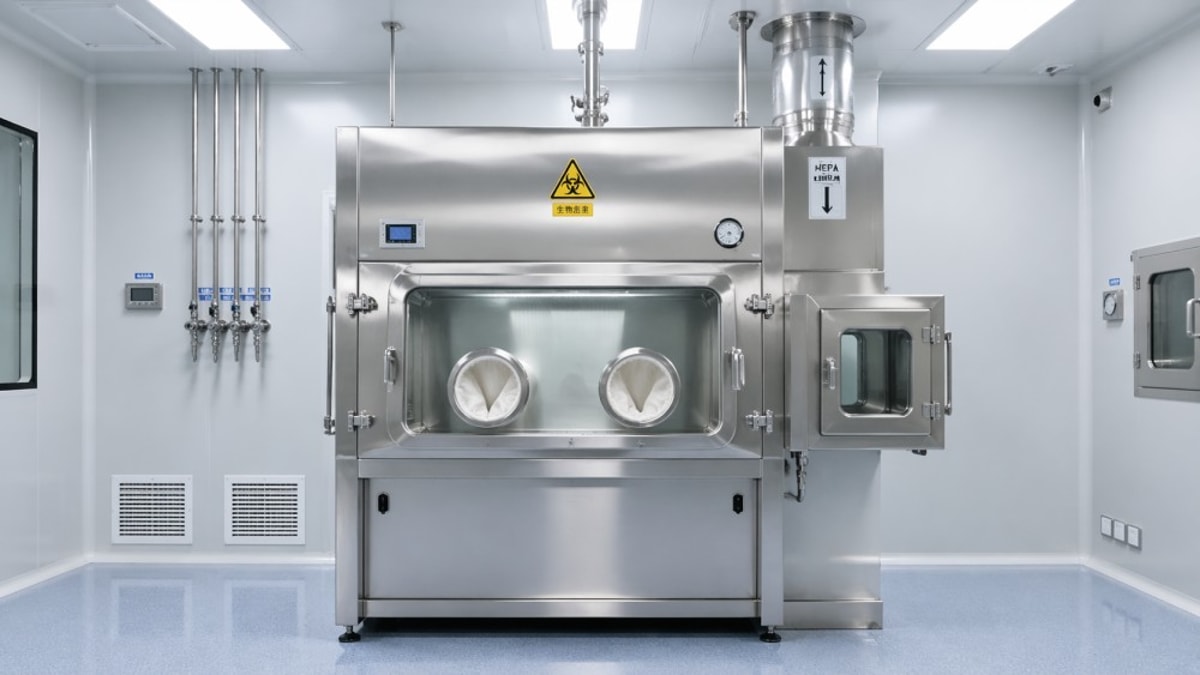
A Class III Biosafety Cabinet is a totally enclosed, gas-tight containment system designed for work with highly hazardous biological agents. Unlike open-front cabinets, it separates the operator from the process by means of attached gloves and sealed transfer methods. In practice, this means the specification sheet must be read as a containment blueprint, not just a product brochure.
For technical evaluators, the first checkpoint is intended biosafety level alignment. Many projects consider Class III systems for BSL-3 enhanced programs or BSL-4 workflows, but the cabinet alone does not define facility classification. Buyers should verify how the cabinet integrates with room pressure control, exhaust treatment, pass-through systems, and decontamination procedures over a 24/7 operating cycle.
Containment performance also depends on construction quality. Typical reviews include welded stainless steel body integrity, sealed viewing panels, glove and sleeve configuration, and resistance to repeated VHP or formaldehyde decontamination cycles. In high-throughput labs, where a cabinet may support 2 to 3 shifts per day, material finish and seal durability directly affect service intervals and contamination risk.
Another critical point is negative pressure strategy. A Class III Biosafety Cabinet generally operates below ambient room pressure, and many systems are connected to dedicated exhaust. If pressure monitoring resolution is weak or alarm logic is unclear, operators may not detect drift early enough. Procurement teams should therefore ask for alarm thresholds, display visibility, and response behavior during utility fluctuation or fan failure scenarios.
Core specification categories to review first
- Cabinet integrity: gas-tight construction, weld quality, and access point sealing.
- Air management: supply and exhaust HEPA arrangement, pressure differential logic, and airflow monitoring.
- Ergonomics: glove port spacing, window sightline, work zone depth, and operator reach envelope.
- Process support: pass box design, dunk tank option, sterilization compatibility, and instrument integration.
- Qualification readiness: test ports, leak test access, calibration features, and documentation package completeness.
Baseline checks for cross-functional teams
A procurement manager may focus on budget and lead time, while a biosafety officer prioritizes leak integrity and decontamination. An engineering consultant may look at exhaust static pressure, electrical load, and utility routing. Aligning these viewpoints early is essential, especially on projects with 8 to 16 week installation windows and multi-vendor coordination.
The table below summarizes the primary specification areas that most decision-makers should review before shortlisting vendors. It is particularly useful for institutions comparing several cabinets with similar external dimensions but very different lifecycle implications.
The key takeaway is that containment is multidimensional. A cabinet can appear robust in general terms, yet still create issues if the pressure control range is narrow, the transfer chamber is undersized, or filter access complicates annual certification. Early specification review prevents those hidden weaknesses from surfacing after installation.
Critical Technical Checks: Airflow, Filtration, Materials, and Utilities
The most scrutinized specification category in a Class III Biosafety Cabinet is the airflow and filtration system. Buyers should confirm whether the cabinet uses single or redundant exhaust filtration, how the supply air is treated, and whether the design supports in situ testing. In many high-containment applications, the ability to perform leak scans and integrity checks without major disassembly can reduce maintenance downtime from several days to a shorter scheduled window.
The role of a dependable HEPA filter manufacturer also deserves attention. Filter efficiency claims are not enough on their own. Technical teams should ask about media consistency, frame construction, gasket chemistry, pressure drop profile, and compatibility with the cabinet housing. Stable pressure drop behavior over time supports fan performance and alarm reliability, especially when systems run continuously for 12 to 24 hours per day.
Material selection is equally important. Stainless steel grade, weld finish, viewing window composition, glove sleeve interface, and seal materials all affect decontamination resilience. Where repeated exposure to VHP, chlorine-based agents, or other aggressive sanitants is expected, procurement teams should review compatibility data and expected replacement intervals. In many facilities, consumable and wearable parts may need evaluation every 6 to 12 months.
Utilities should never be treated as secondary details. Cabinets may require dedicated electrical feeds, exhaust coordination, gas services, data interfaces, and integration with building management or alarm systems. A specification that omits utility load or exhaust requirements can create serious problems during cleanroom construction or retrofit, especially when ceiling space and service routing are limited.
High-priority engineering questions
- Does the cabinet maintain stable negative pressure during glove movement, material transfer, and utility interruptions?
- Are the HEPA housings designed for safe test access and seal verification during periodic certification?
- What is the typical operating noise and vibration level when internal equipment is installed?
- Can the work zone support microscopes, balances, or automated handling tools without disrupting safe operation?
- How are exhaust connections coordinated with facility systems, including fail-safe response during fan or damper events?
Typical technical review ranges
Exact values vary by design, but technical teams often compare dimensions, pressure behavior, utility loads, and service clearances within practical ranges. For example, external depth and service space can determine whether a cabinet fits a retrofit room, while transfer chamber volume affects whether larger process items can move without breaking workflow. These details matter as much as the headline containment category.
The following comparison table helps technical evaluators organize key checks during vendor review meetings, factory acceptance planning, or tender evaluations.
The practical message is simple: a high-containment cabinet should be technically compatible with the room, the process, and the maintenance model. If the engineering interface is weak, even a cabinet with strong nominal containment can become difficult to validate, expensive to service, or disruptive to operations.
Procurement Criteria for Buyers, Evaluators, and Project Managers
Procurement decisions for a Class III Biosafety Cabinet should be based on total operational fit rather than purchase price alone. A lower initial quote may lead to higher installation complexity, longer downtime, or more frequent replacement of gloves, gaskets, and filters. For institutional buyers, lifecycle visibility across 3 to 7 years often provides a more realistic comparison basis than capex alone.
One effective approach is to score each vendor across at least 5 dimensions: containment design, qualification support, cleanability, service response, and supply chain reliability. This is especially useful when comparing direct manufacturers, regional integrators, and distributors. Distributors and agents can add value when they provide local spare stock, factory-trained technicians, and documented escalation channels.
Documentation quality is another major differentiator. Buyers should request dimensional drawings, utility requirements, recommended room interfaces, preventive maintenance schedules, glove replacement procedures, filter test access plans, and draft FAT/SAT documentation. In regulated projects, incomplete technical documentation can delay approval far more than a 2 to 4 week shipping difference.
Lead time assessment should include more than factory production. Teams should separate manufacturing time, shipping, site readiness, installation, and qualification. In global projects, total elapsed time may extend from 8 weeks to 20 weeks depending on customization level, local compliance review, and whether room exhaust and automation interfaces are already prepared.
Recommended vendor evaluation checklist
- Confirm whether the vendor provides installation support, SAT protocols, and operator training for at least 2 user groups.
- Review spare part availability for gloves, sleeves, seals, lamps, sensors, and filters over a multi-year support period.
- Check whether response time commitments are clearly defined, such as remote support within 24 hours or on-site support within 72 hours where feasible.
- Verify cabinet compatibility with facility standards covering GMP, biosafety, and internal quality documentation practices.
- Assess whether the supplier can coordinate with cleanroom contractors, HVAC consultants, and automation teams during design review.
Common procurement mistakes
A frequent error is buying based on external size without validating internal working volume and transfer logic. Another is treating HEPA filters as a generic component instead of a performance-critical element linked to pressure drop, testability, and housing seal integrity. Buyers also underestimate the effect of glove ergonomics; poor glove position can slow routine procedures and increase fatigue within the first 30 to 60 minutes of use.
The best procurement outcomes usually come from cross-functional review. When end users, safety managers, engineering teams, and procurement officers align on 6 to 10 non-negotiable specification points before tender release, vendor comparison becomes clearer and post-award change requests are significantly reduced.
Integration with Cleanrooms, Automation, and Precision Workflows
A Class III Biosafety Cabinet performs best when it is planned as part of a broader controlled environment strategy. In modern facilities, containment equipment must interface with room classification, pressure cascade, access control, decontamination routes, and monitoring architecture. This is why cleanroom engineers, biosafety specialists, and process owners should align design assumptions before procurement is finalized.
In cleanroom engineering terms, the cabinet is both an internal containment barrier and a mechanical load on the room system. It can influence exhaust balancing, heat load, maintenance clearance, and operator circulation. A cabinet placed in a constrained layout may meet containment criteria but still create workflow bottlenecks, awkward material transfer, or service obstruction. Early 2D and 3D layout review is therefore valuable, especially in retrofit projects.
Laboratory automation introduces another layer of specification checking. If the cabinet will house balances, robotic arms, sealed centrifuge interfaces, or sensor-driven instrumentation, teams should assess vibration, cable routing, pass-through design, and glove-based operability. Some automated tasks that work well in open systems become inefficient in glovebox-style manipulation unless the workflow is redesigned around reach, visibility, and transfer sequencing.
Precision instrumentation also requires environmental stability. Sensitive weighing, imaging, or sample preparation steps may be affected by internal airflow behavior, lighting uniformity, and physical access. For projects involving analytical accuracy, teams should evaluate whether the cabinet supports process repeatability over extended runs of 4 to 8 hours, not just short demonstration tests.
Implementation steps for integrated projects
- Define biological risk level, process map, and transfer method before selecting cabinet size.
- Review room layout, HVAC interface, exhaust path, and service clearances with engineering stakeholders.
- Confirm instrumentation footprint, power requirements, and cable or gas routing inside the cabinet envelope.
- Plan FAT, installation, SAT, and operator qualification as separate milestones rather than one combined event.
- Establish periodic testing intervals for gloves, pressure alarms, and filter integrity within the site quality system.
Risk points during integration
Projects often run into trouble when the cabinet is selected before exhaust design is fixed, or when automation hardware is added late without confirming access geometry. Another common issue is underestimating service space. A cabinet may fit through the door and into the room, yet still lack the 600 mm to 1200 mm clearance needed for safe testing or filter replacement.
Good integration planning protects not only safety but also uptime. When containment equipment, cleanroom systems, and precision workflows are coordinated from the start, organizations reduce change orders, shorten commissioning cycles, and create a more resilient operating platform for critical research or production tasks.
Maintenance, Validation, and Frequently Asked Selection Questions
The long-term value of a Class III Biosafety Cabinet depends on how well it can be maintained and requalified. Even a robust cabinet design will underperform if glove replacements are difficult, alarms are not routinely tested, or filter integrity verification requires excessive disassembly. Maintenance planning should therefore be discussed before purchase, not after handover.
Validation readiness matters to both regulated and non-regulated laboratories. Teams should verify what documentation is supplied for installation qualification support, pressure monitoring calibration, filter test access, and recommended periodic checks. In many sites, core checks are scheduled quarterly, semiannually, or annually depending on use intensity and biosafety policy.
Service strategy should also cover operator training refresh. In cabinets used by multiple shifts or rotating staff, refresher training every 6 to 12 months can reduce glove misuse, transfer errors, and alarm response mistakes. For distributors and regional service partners, the ability to provide local support and spare part continuity is a strong commercial differentiator.
FAQ: Which indicators matter most during selection?
The most important indicators are containment integrity, pressure monitoring reliability, filtration design, glove ergonomics, transfer method, and service accessibility. For most projects, 6 to 8 measurable checks are enough to create a solid shortlist. If a cabinet scores well on containment but poorly on maintenance access or room integration, it may not be the right choice operationally.
FAQ: How long does delivery and commissioning usually take?
Standard lead times can range from 8 to 16 weeks, while highly customized systems may take longer. On-site installation and commissioning often require 2 to 5 days, but total project duration depends on room readiness, exhaust connection, qualification scope, and local compliance review. International shipping and customs can add additional variability.
FAQ: Why is the HEPA filter manufacturer important?
Because filter consistency affects pressure drop, seal performance, testing reliability, and long-term containment stability. A cabinet design can be strong, but if the installed filters show uneven quality or poor compatibility with the housing, maintenance becomes harder and performance confidence declines. Buyers should review filter construction and service support, not just nominal efficiency claims.
FAQ: What should operators check after installation?
Operators should confirm alarm behavior, glove condition, pass-through function, cleaning protocol, utility status, and daily inspection routines. A practical startup checklist with 5 to 10 items helps standardize use across shifts. Early discipline in operation often prevents small deviations from becoming major containment or quality issues.
For organizations managing high-containment environments, Class III Biosafety Cabinet selection should balance engineering fit, biosafety performance, documentation quality, and service resilience. The best results come from reviewing specifications in context: room integration, process demands, validation needs, and long-term support. If you are evaluating a new installation, expansion, or replacement project, contact us to discuss technical details, compare configuration options, and obtain a solution aligned with your facility, regulatory, and operational goals.
Related News
- Class III Biosafety Cabinets: Key Spec ChecksApr 29, 2026Class III Biosafety Cabinets guide covering Biosafety Cabinets specs, GMP Compliance, Security Engineering, HEPA filter manufacturer selection, and cleanroom integration—compare key checks before you buy.
- Class III Biosafety Cabinets vs Isolators ExplainedApr 29, 2026Class III Biosafety Cabinets vs isolators explained: compare Biosafety Cabinets, GMP Compliance, Cleanroom Engineering, and Laboratory Automation to choose the right containment system.