
Weekly Insights
Stay ahead with our curated technology reports delivered every Monday.
The true cost of Biosafety Cabinets extends far beyond the initial quote. From GMP Compliance and evolving Regulatory Frameworks to maintenance, validation, energy use, and operator safety, buyers must assess the full lifecycle impact. Whether comparing Class III Biosafety Cabinets, Laminar Flow Units, or solutions from a hepa filter manufacturer, this guide helps technical, procurement, and lab leaders make smarter, lower-risk investment decisions.
Why the purchase price tells only part of the biosafety cabinet cost story
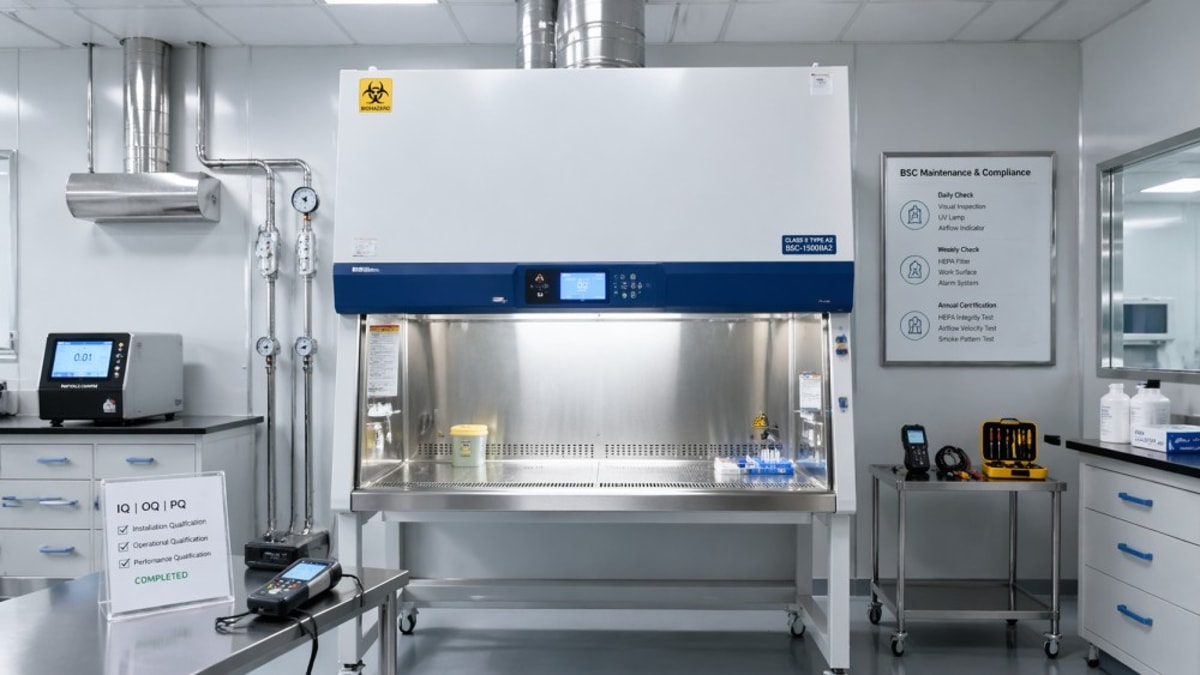
In regulated laboratories, clean manufacturing environments, hospital microbiology units, and advanced R&D facilities, the listed price of a Biosafety Cabinet is only the entry point. A Class II or Class III unit may look comparable on a quotation sheet, yet the real financial exposure emerges across installation, airflow qualification, filter integrity testing, operator training, service access, downtime risk, and end-of-life replacement planning.
For procurement teams, the mistake is often simple: comparing capital expenditure without evaluating 3-year, 5-year, or even 10-year operating burden. For operators and safety managers, the concern is different. A lower upfront price can lead to unstable inflow velocity, poor ergonomic design, difficult decontamination access, and higher contamination events. In high-containment environments, those hidden costs rapidly exceed the initial savings.
G-LCE approaches biosafety cabinet evaluation from a technical benchmarking perspective. That means decision-makers can compare equipment not only by model type, but also by containment objective, clean air classification, compliance pathway, utility demand, and maintenance frequency. In facilities working under GMP, BSL-2, BSL-3, or ISO-controlled conditions, these factors determine whether a cabinet supports production continuity or becomes a recurring risk point.
A practical buying framework should separate cost into at least 5 layers: acquisition, commissioning, compliance validation, routine operation, and lifecycle service. Once those layers are visible, stakeholders from engineering, QC, EHS, project management, and commercial review can make a more defensible decision.
- Acquisition cost includes cabinet configuration, work zone size, sash design, fan system, and filtration architecture.
- Commissioning cost often covers site readiness, positioning, electrical hookup, exhaust coordination, and initial performance verification within 7–15 days after delivery.
- Compliance cost includes certification, documentation, validation records, and periodic requalification, commonly every 6–12 months depending on internal SOPs and risk level.
- Operating cost includes power use, consumables, service labor, spare parts, and planned shutdown windows.
- Lifecycle cost includes filter replacement, decontamination before service, relocation risk, and disposal at the end of service life.
Which hidden cost drivers matter most in Class II, Class III, and laminar flow comparisons?
Many buyers compare Biosafety Cabinets with Laminar Flow Units because both involve HEPA filtration and controlled airflow. However, they serve different risk objectives. A laminar flow unit mainly protects the product, while a biosafety cabinet is designed to protect product, personnel, and environment, depending on class. That distinction directly changes cost structure, compliance requirements, and service complexity.
Class III Biosafety Cabinets represent the highest containment category in routine cabinet discussions. They typically require a more integrated installation approach, glove access systems, sealed transfer methods, and stronger connection planning with building utilities or containment systems. As a result, their support costs can be substantially higher than those of standard Class II units, even before considering qualification and maintenance intervals.
The table below helps technical evaluators and procurement teams compare common lifecycle cost drivers across cabinet and airflow protection options. It is not a substitute for site-specific engineering review, but it is useful for identifying where budget overruns usually begin.
The key takeaway is that “cheaper” and “lower total cost” are rarely the same. If the workflow requires personnel protection, a laminar flow unit may create compliance and safety gaps. If the process risk is modest, a high-containment cabinet may introduce unnecessary validation and service cost. Matching the cabinet class to the actual hazard profile is one of the most effective ways to control total ownership cost.
Where hidden costs usually appear first
The first cost surprise often appears during site preparation. Teams discover ceiling clearance constraints, insufficient electrical capacity, incompatible exhaust routing, or room pressure conflicts with nearby cleanroom or containment areas. These issues can delay projects by 2–4 weeks and create change-order costs that were not visible in the initial equipment bid.
The second surprise appears during routine service. Not all cabinets are equally easy to certify, decontaminate, or repair. Access to blower sections, filter housings, control systems, and sash mechanisms can determine whether annual service is a half-day event or a multi-day interruption involving temporary workflow relocation.
The third surprise is process disruption. In production support labs or critical research programs, one failed cabinet can affect batch release timing, sample handling schedules, or biosafety compliance records. This is why enterprise buyers increasingly assess cabinet cost in relation to business continuity, not only equipment depreciation.
How compliance, validation, and maintenance shape total cost of ownership
In highly regulated settings, compliance is not an optional add-on. It is a recurring operating requirement. Biosafety Cabinets commonly need installation qualification support, airflow verification, HEPA or ULPA filter integrity checks where applicable, alarm verification, and documentation retention. Under GMP-linked systems, additional review of cleaning procedures, change control, and requalification triggers may also be necessary.
Standards do not dictate every facility-specific cost, but they do create a framework that influences spending. NSF/ANSI 49 is frequently referenced for biosafety cabinet performance, while ISO 14644 may shape surrounding clean environment expectations. In higher-risk programs, containment design may also interact with broader BSL protocols. The more rigorous the environment, the less realistic it becomes to evaluate equipment purely by purchase price.
A disciplined maintenance plan typically includes 4 service layers: daily operator checks, periodic internal housekeeping, scheduled certification, and component replacement based on condition or interval. If any of these layers are skipped, the hidden cost emerges later as failed audits, workflow stoppages, contamination investigations, or accelerated wear.
The table below summarizes common lifecycle cost elements that should be budgeted before procurement approval. It is especially useful for project leaders building a total cost of ownership model for 1 cabinet, 5 cabinets, or a multi-room deployment.
A cabinet that is easier to certify, simpler to access, and better documented may carry a higher initial quote yet lower the total cost over the next 3–5 years. That is especially true for global facilities where downtime approval, technician access, and deviation handling are expensive administrative events, not just maintenance tasks.
Compliance questions buyers should ask before issuing a PO
Before purchase approval, technical and procurement teams should confirm whether the cabinet will operate in a research lab, clinical support space, sterile manufacturing environment, or high-containment suite. Each setting changes the required documentation package, installation method, and acceptable service window.
Four practical checkpoints
- Will the cabinet require connection to building exhaust, canopy integration, or room pressure coordination?
- What are the recertification triggers: annual timing only, or also relocation, filter change, major repair, and process change?
- Does the vendor provide documentation suitable for GMP, internal QA review, and site engineering handover?
- Can service be completed within your shutdown tolerance, such as 4 hours, 1 day, or a weekend maintenance window?
These questions are simple, but they prevent one of the most common procurement errors: buying a technically acceptable cabinet that is operationally expensive to support.
How to evaluate biosafety cabinet suppliers, HEPA filter support, and long-term service risk
A biosafety cabinet is not just a fabricated enclosure with fans and filters. It is a controlled-environment asset that depends on support quality over its full life. For this reason, supplier evaluation should include service infrastructure, spare parts strategy, HEPA filter sourcing, application knowledge, and documentation discipline. A capable hepa filter manufacturer or filtration supply chain partner can significantly affect lead time, replacement quality, and continuity planning.
In global B2B settings, buyers should also look at regional support compatibility. A cabinet deployed across multiple sites is easier to standardize when certification procedures, replacement parts, and control logic are supported consistently. Otherwise, one multinational program can end up managing different test methods, training standards, and maintenance records for what appears to be the same asset class.
G-LCE’s benchmarking perspective is useful here because it evaluates hardware in context. Biosafety cabinets do not operate in isolation. Their performance and cost are linked to cleanroom engineering, air handling strategy, UHP utilities, automation interfaces, and specialized emission or effluent treatment where process hazards demand it. This system-level view helps procurement teams avoid narrow comparisons that ignore downstream constraints.
The checklist below can be used during RFQ review, technical clarification meetings, or distributor evaluations. It is especially relevant for project managers and enterprise decision-makers balancing capex control with audit resilience.
- Confirm application fit: hazardous biological handling, sterile compounding support, sample preparation, or high-containment work all require different cabinet configurations.
- Verify service response assumptions: ask whether standard support is available within 24–72 hours locally or requires imported technician scheduling.
- Review filter and spare part availability: long lead times for HEPA modules, motors, sensors, or control boards can turn minor failures into multi-week stoppages.
- Assess documentation quality: installation drawings, utility requirements, test records, and maintenance manuals should be clear enough for QA and engineering use.
- Check lifecycle compatibility: if the cabinet may be relocated in 2–3 years, confirm how recertification, decontamination, and transport risk will be managed.
Common supplier comparison mistakes
One common mistake is treating all filtration systems as interchangeable. Filter grade, frame integrity, sealing method, and test accessibility affect containment reliability and maintenance complexity. Another mistake is underestimating controls and alarms. User interface quality, alarm clarity, and data visibility influence daily compliance and operator behavior more than many buyers expect.
A third mistake is ignoring distributor capability. In some markets, the distributor is effectively the service provider, application advisor, and first-line trainer. If that channel lacks controlled-environment expertise, the cabinet may be installed correctly but supported poorly. For distributors and agents themselves, strong technical alignment with biosafety and cleanroom standards becomes a commercial differentiator.
For organizations managing sensitive research or production nodes, the best procurement decision is usually the one that reduces operational variance. Predictable service, clear compliance records, and technically sound replacement planning often create more value than the lowest initial invoice.
FAQ: what buyers, operators, and project teams ask before investing
How should we compare a Biosafety Cabinet and a Laminar Flow Unit?
Start with risk, not price. If the process involves biological hazards and personnel protection is required, a laminar flow unit is usually not an equivalent substitute. If the main goal is product protection in a cleaner process area, a laminar flow unit may be appropriate and less costly to maintain. The decision should be made against hazard level, room classification, SOP requirements, and compliance expectations.
What maintenance interval should we budget for?
A practical budget usually assumes routine operator checks daily, internal housekeeping according to SOP, and formal certification every 6–12 months. Additional events such as relocation, major repair, failed alarm tests, or filter replacement may trigger extra cost. High-use cabinets in critical operations often justify more proactive review because downtime cost can exceed service cost.
Are Class III Biosafety Cabinets always the better long-term investment?
No. Class III Biosafety Cabinets provide a higher containment level, but they also introduce more complex commissioning, operation, and maintenance requirements. If your workflow does not need that containment level, the additional lifecycle cost may not be justified. Selection should follow a structured risk assessment rather than a “higher class is better” assumption.
What should procurement request in a quotation package?
Ask for 5 categories of information: equipment configuration, utility requirements, commissioning scope, certification or test deliverables, and service support details. Also request estimated lead time, spare part availability, and any assumptions affecting site readiness. This makes vendor comparison far more reliable and reduces hidden variation in total cost.
How long is a realistic project timeline from order to validated use?
For standard configurations, buyers often plan several stages rather than one date: manufacturing and delivery, site preparation, installation, and certification. Depending on region, customization, and facility readiness, total timeline may range from a few weeks to several months. The critical point is that validated use usually occurs after delivery, not on delivery day.
Why work with a technical benchmarking partner before finalizing cabinet selection
When biosafety cabinet cost is evaluated through a narrow purchasing lens, hidden risks remain invisible until operation begins. G-LCE helps decision-makers avoid that gap by connecting hardware choice with cleanroom engineering, containment logic, regulatory fit, serviceability, and cross-functional project requirements. This is especially valuable for organizations operating under GMP, ISO-controlled environments, or higher biosafety obligations.
For information researchers, G-LCE can support structured comparison between Class II, Class III, and laminar flow solutions. For operators and QA teams, the focus can shift to usability, decontamination access, and certification planning. For procurement and business evaluators, the discussion can move toward lifecycle cost, vendor risk, and implementation timing. For project leaders and distributors, technical alignment across multi-site deployment becomes easier to manage.
If you are assessing Biosafety Cabinets beyond the purchase price, contact us to discuss practical decision inputs: parameter confirmation, application-based product selection, lead time expectations, customized solution paths, filtration and HEPA replacement strategy, certification requirements, and quotation alignment. A focused review at the RFQ stage can prevent expensive redesign, avoid compliance gaps, and improve long-term operating stability.
Share your intended use scenario, room conditions, containment target, and project schedule. We can help map the right cabinet class, identify hidden cost drivers, and clarify what should be included in the technical and commercial scope before you commit budget.
Related News
- What Biosafety Cabinets Cost Beyond the Purchase PriceApr 29, 2026Biosafety Cabinets cost more than the purchase price—explore GMP Compliance, Regulatory Frameworks, Class III Biosafety Cabinets, Laminar Flow Units, and lifecycle risks before you buy.
- How to Choose Biosafety Cabinets Without OverbuyingApr 29, 2026Biosafety Cabinets buying guide: choose the right class for risk, GMP Compliance, Security Engineering, and Cleanroom Engineering—avoid overbuying and cut lifecycle cost.