Weekly Insights
Stay ahead with our curated technology reports delivered every Monday.
Security Engineering is the backbone of GMP Compliance in high-stakes environments, where Biosafety Cabinets, Cleanroom Engineering, Laboratory Automation, and Precision Instrumentation must align with strict Regulatory Frameworks. From Class III Biosafety Cabinets and Laminar Flow Units to selecting a reliable HEPA filter manufacturer, robust engineering controls help organizations reduce risk, protect product integrity, and support compliant, audit-ready operations.
Why security engineering matters in GMP-regulated operations
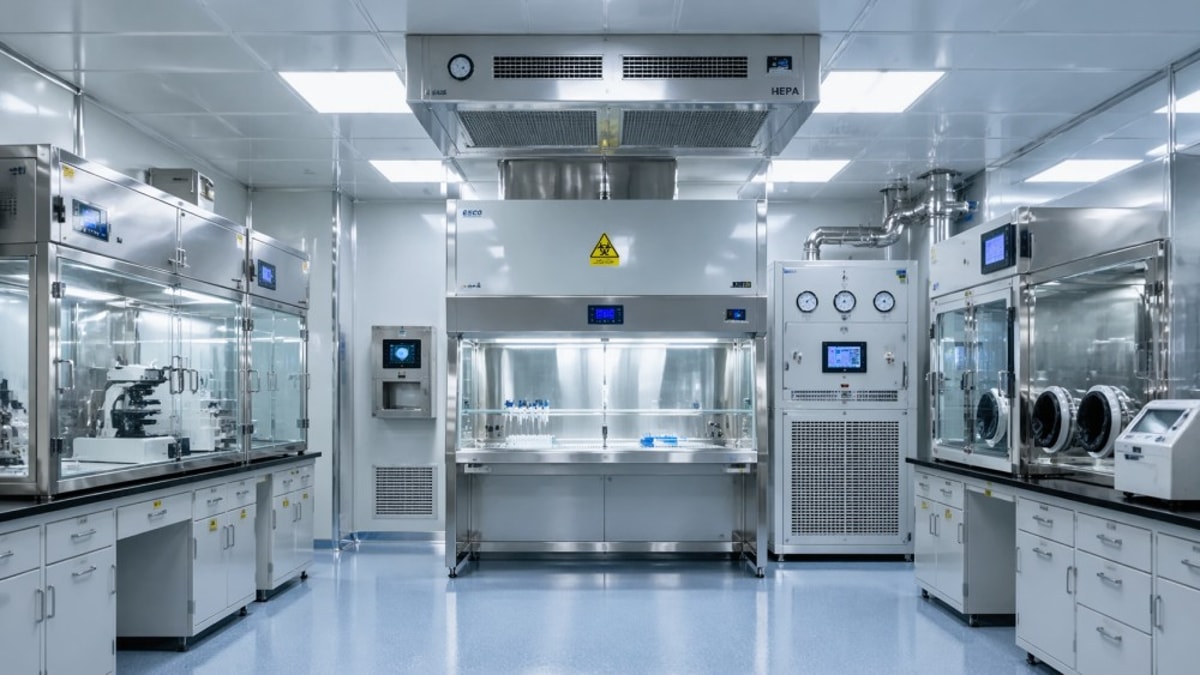
GMP compliance is often discussed as a documentation issue, yet audit findings frequently originate in physical systems, workflow controls, and containment design. In pharmaceuticals, biologics, cell therapy, medical devices, semiconductor-adjacent life science production, and advanced research facilities, security engineering creates the conditions in which procedures can actually be followed. Without robust access control, pressure zoning, airflow discipline, alarm logic, and traceable automation, even a well-written quality system can fail under routine production pressure.
For operators and quality managers, the core question is practical: can the environment consistently prevent contamination, mix-ups, unauthorized intervention, and unrecorded deviations during 24/7 or multi-shift use? For technical evaluators and project leaders, the question is broader: can the facility maintain validated performance over a 3–5 year equipment lifecycle while supporting maintenance, cleaning, requalification, and change control? Security engineering directly connects these concerns.
In GMP settings, security is not limited to cyber or perimeter control. It includes engineered barriers, people flow segregation, material transfer integrity, interlocked doors, HEPA filtration architecture, biosafety containment, UHP gas delivery integrity, and instrument data protection. When these layers are coordinated, they reduce the probability of out-of-specification events, shorten root-cause analysis cycles, and improve readiness for internal, customer, and regulatory inspections.
This is where G-LCE adds value across industries. By benchmarking cleanroom systems, high-containment protection, UHP gas infrastructure, laboratory automation, and effluent treatment against ISO 14644, NSF/ANSI 49, SEMI S2, and common GMP expectations, G-LCE helps decision-makers compare engineering options through both compliance and operational risk lenses, not through brochure claims alone.
- Production teams need stable environmental control during 8–24 hour operating windows.
- QA and EHS teams need alarms, records, and containment logic that support investigation and release decisions.
- Procurement teams need specifications that distinguish essential compliance features from optional upgrades.
- Executives need engineered systems that lower long-term deviation cost, not just initial capital cost.
Which engineering controls most directly support GMP compliance?
Not every control has equal compliance impact. The most valuable security engineering measures are the ones that protect product, process, personnel, and records at the same time. In regulated environments, it is useful to group controls into four layers: facility envelope, process protection, automation and traceability, and maintenance governance. This structure helps procurement and project teams prioritize budgets during early design and expansion phases.
Facility envelope and contamination barriers
Cleanroom Engineering begins with zoning, pressure cascades, filtered air supply, return air strategy, and surface cleanability. Typical GMP projects define differential pressure bands, room classification targets, door interlocks, and pass-through arrangements during concept design rather than after installation. A pressure drift that persists for even 15–30 minutes can trigger investigation if product exposure risk exists, which makes sensor placement and alarm escalation logic more than a convenience feature.
HEPA filtration is a central control point, but buying from a HEPA filter manufacturer on price alone is risky. Procurement teams should evaluate filter media consistency, frame sealing approach, testability, replacement access, and compatibility with room integrity protocols. For critical areas, the engineering question is not simply filter efficiency; it is whether the full air handling assembly supports repeatable in-situ verification and controlled maintenance without compromising classified space performance.
Containment, access, and intervention control
Biosafety Cabinets and high-containment devices support GMP when they reduce uncontrolled intervention during weighing, dispensing, aseptic manipulation, or hazardous sample handling. Class II and Class III Biosafety Cabinets serve different risk profiles, and the right choice depends on operator exposure, sample hazard, process openness, and decontamination needs. In high-consequence workflows, glove integrity, transfer interfaces, and cabinet alarm behavior may be as important as nominal airflow values.
Access control should also be engineered around operations, not treated as a standalone security upgrade. Badge control, role-based area permissions, equipment login segmentation, and event logging reduce the chance of unauthorized parameter changes or accidental cross-use of spaces. In multi-tenant or multi-product facilities, these measures become especially important during shift change, cleaning windows, and maintenance interventions.
Automation, data integrity, and precision instrumentation
Laboratory Automation and Precision Instrumentation support GMP by reducing manual variability and improving traceability. Automated liquid handling, monitored incubators, recipe-controlled dispensing, barcode-based material tracking, and electronic audit trails can reduce undocumented process variation across 3 critical stages: preparation, execution, and release review. However, automation only helps compliance if user permissions, backup logic, calibration status, and exception handling are designed clearly.
Instrument selection should therefore consider more than throughput. Technical evaluators should ask whether the system supports timestamped events, parameter lockout, calibration reminders, controlled export, and integration with quality review workflows. G-LCE’s benchmarking perspective is useful here because it connects equipment performance to regulated operating reality, where a missed calibration flag can carry more compliance impact than a small gain in nominal speed.
The following table summarizes common engineering controls and their GMP relevance across industries.
A practical takeaway is that GMP compliance depends on control interaction, not isolated equipment claims. A strong cleanroom without disciplined access control can still fail. A sophisticated cabinet without maintenance planning can still drift out of validated performance. The right engineering package must be assessed as a system.
How to evaluate Biosafety Cabinets, cleanroom systems, and automation for compliant use
Technical assessment becomes difficult when several departments use different decision criteria. Operators focus on ease of use, quality teams on control and documentation, procurement on cost and lead time, and executives on risk and business continuity. A compliant evaluation framework should compare equipment according to intended use, maintenance burden, qualification effort, and incident exposure, not just purchase price or catalog specifications.
For example, a Laminar Flow Unit may be appropriate for product protection in one open process, while a Biosafety Cabinet is necessary where both sample containment and operator protection are required. Similarly, a standalone instrument may be acceptable in a lower-risk analytical step, while networked Laboratory Automation with permissions and audit logs is preferable in high-frequency release or traceability-sensitive workflows. These distinctions matter during URS development and vendor comparison.
The table below offers a decision-oriented comparison for common controlled-environment assets used in GMP-sensitive operations.
The comparison shows why technical fit should be translated into procurement language. Lead time may range from 4–12 weeks for standard assets, while customized containment or integrated automation projects can extend to 12–24 weeks depending on FAT, SAT, utility coordination, and site readiness. Planning must therefore account for validation and training windows, not only shipping dates.
A 5-point procurement checklist for decision teams
- Confirm intended use and risk category before comparing models. A lower-cost unit may be noncompliant if containment assumptions are wrong.
- Define 5 core acceptance areas: environmental control, user access, data traceability, serviceability, and qualification support.
- Request documentation packages early, including manuals, test protocols, calibration approach, and spare parts recommendations.
- Check whether maintenance can be performed within the room concept without long production shutdowns.
- Evaluate supplier responsiveness for post-installation deviation support, because compliance issues often emerge in the first 30–90 days of operation.
For distributors and integrators, the same checklist helps position products more credibly. Buyers increasingly ask not only what the equipment does, but how it behaves under cleaning cycles, alarm events, filter replacement, and audit review. Structured answers reduce qualification friction and improve technical trust.
Implementation path: from specification to validation and routine control
Security engineering supports GMP only when implementation is disciplined. Many compliance gaps arise not from wrong equipment, but from weak specification control, late design changes, and poor handover between engineering and quality teams. A practical rollout typically spans 4 stages: user requirement definition, design review, qualification and testing, and operational monitoring. Skipping one stage usually increases rework, especially in cleanroom or containment projects.
During the URS phase, project owners should define room classification targets, containment goals, maintenance access expectations, user hierarchy, and required records. This is also the right time to identify utility dependencies such as exhaust, compressed gas, UHP gas, waste handling, and backup power. In high-value nodes, even a 2–6 hour utility interruption can trigger product impact assessment, so resilience planning should be part of the initial design package.
Qualification should include more than installation checks. Depending on the system, teams may review airflow behavior, pressure recovery, alarm logic, interlock sequencing, data access control, and cleaning compatibility. For integrated Laboratory Automation and Precision Instrumentation, challenge testing should verify that incorrect logins, parameter changes, or network interruptions do not create undocumented process states. This is highly relevant for GMP data integrity expectations.
Routine control then turns engineering design into sustained compliance. Common intervals include daily visual checks, weekly housekeeping verification, monthly alarm review, quarterly calibration review, and annual or risk-based requalification. The exact schedule varies by process criticality, but the principle is consistent: engineered controls must remain observable, testable, and reviewable throughout their service life.
Typical implementation flow for controlled environments and protected processes
- Step 1: Define process risk, room function, operator exposure level, and data integrity needs.
- Step 2: Match assets such as Biosafety Cabinets, Laminar Flow Units, automation platforms, and HEPA-based HVAC to those risks.
- Step 3: Review installation constraints including exhaust routing, cleanability, pass-through, utilities, and service access.
- Step 4: Execute FAT or equivalent checks, then site qualification, training, and controlled release for routine use.
- Step 5: Establish preventive maintenance, spare parts logic, and deviation escalation paths for the next 12 months.
Where projects commonly fail
One frequent mistake is separating procurement from qualification. A buyer secures an attractive price, but the unit requires costly room modification, extended commissioning, or special certification support later. Another mistake is underestimating service clearances. If filter change, sensor calibration, or cabinet decontamination cannot be performed efficiently, downtime expands and GMP risk rises. In busy facilities, an extra 1–2 days of outage can be more expensive than a higher initial equipment price.
G-LCE’s cross-pillar perspective helps prevent these issues by connecting cleanroom architecture, biosafety protection, gas and chemical delivery, automation, and waste treatment in one decision framework. That matters because real GMP performance depends on interfaces between systems, not on isolated component specifications.
Common misconceptions, risk signals, and FAQ for buyers and operators
Search behavior around GMP compliance often reveals the same uncertainty: teams know they need compliant equipment, but they are less certain about where compliance risk actually starts. The answer is usually earlier than expected. Risk begins in requirement definition, continues through system integration, and remains present through maintenance and record review. The following questions address common issues across regulated industries.
Does GMP compliance only depend on SOPs and validation documents?
No. Documents are necessary, but they cannot compensate for weak engineering controls. If doors are not interlocked, if pressure recovery is slow, if a Biosafety Cabinet alarm is easy to override without review, or if automation logs do not capture user actions, the process remains vulnerable. A strong GMP posture requires both written control and physical control.
How should we choose between a laminar flow solution and a Biosafety Cabinet?
Start with the exposure profile. If the task mainly needs product protection and presents minimal operator hazard, a laminar flow setup may be suitable. If the process involves infectious, toxic, or uncertain biological risk, a Biosafety Cabinet is usually more appropriate. Selection should also consider cleaning method, workflow interruptions, transfer frequency, and whether operations run in short batches or repeated cycles across 2–3 shifts.
What should we ask a HEPA filter manufacturer before purchase?
Ask about filter construction consistency, sealing method, pressure drop range, compatibility with in-situ integrity testing, replacement access, and recommended maintenance intervals. Also verify whether the manufacturer can support the validation documentation your site requires. In critical GMP areas, serviceability and documentation often matter as much as filter media performance.
Are automation systems always better for compliance?
Not automatically. Automation improves consistency, but poorly configured systems can create hidden risks, especially around user permissions, data backup, recipe versioning, and exception handling. A compliant automated process should make actions more visible, not less visible. Before purchase, confirm who can edit parameters, how changes are logged, and how the system behaves during power or network disruption.
What are early warning signs that engineering controls may not support GMP well enough?
Watch for recurring minor alarms, unexplained pressure drift, frequent manual overrides, difficult cleaning access, calibration delays, inconsistent operator workarounds, and maintenance tasks that require excessive production interruption. These signals often appear 30–180 days before a major deviation or audit finding. Addressing them early is usually less costly than responding after product impact is suspected.
- Misconception: the lowest initial cost is the safest purchasing choice. Reality: lifecycle service and downtime can outweigh capital savings.
- Misconception: any cabinet or air unit with a filter is suitable for GMP. Reality: containment logic, verification pathway, and maintenance design are decisive.
- Misconception: automation removes the need for operator discipline. Reality: it shifts attention toward permissions, review, and exception management.
Why choose G-LCE for GMP-oriented security engineering decisions
When organizations evaluate security engineering for GMP compliance, they rarely need generic information. They need a decision partner that understands how Cleanroom Engineering, Biosafety Cabinets, UHP gas systems, Laboratory Automation, Precision Instrumentation, and specialized treatment infrastructure influence one another in real operating conditions. G-LCE is built for that exact requirement. Its multidisciplinary benchmarking approach helps technical, procurement, and executive teams make aligned decisions for high-sensitivity environments.
This is particularly useful for buyers managing complex projects across multiple industries and facilities. A pharmaceutical fill-finish area, a high-containment biologics suite, an advanced semiconductor-related lab, and a precision analytical platform may all require different configurations, but they share the same pressure points: compliance exposure, product integrity, maintainability, and auditable performance. G-LCE translates those shared concerns into comparable engineering criteria.
If you are reviewing a new build, retrofit, expansion, or replacement project, you can consult G-LCE on specific, decision-ready topics rather than broad theory. That includes parameter confirmation for cleanroom zoning, Biosafety Cabinet or Laminar Flow Unit selection, HEPA filter manufacturer comparison, automation architecture review, expected qualification scope, delivery timeline planning, and certification-oriented documentation expectations. These are the issues that most often affect project success in the first 6–18 months.
Contact G-LCE when you need support with a defined procurement package or an early-stage concept review. Teams can discuss 5 practical areas in detail: technical specifications, product selection, delivery windows, customized solution paths, and compliance documentation needs. This helps reduce ambiguity before RFQ release, before factory acceptance, and before the cost of design changes becomes difficult to control.
- Request parameter review for controlled environment, containment, airflow, and instrumentation requirements.
- Compare product options for Class III Biosafety Cabinets, laminar flow equipment, and integrated automation platforms.
- Discuss typical lead times, installation constraints, FAT or SAT planning, and maintenance access requirements.
- Clarify certification and standards alignment relevant to GMP, ISO 14644, NSF/ANSI 49, and broader regulated operations.
- Open a quotation discussion based on your process risk, budget range, and target commissioning schedule.
- cement
- distributors
- semiconductor
- hepa filter manufacturer
- Cleanroom Engineering
- Controlled Environments
- Biosafety Cabinets
- High-Containment Protection
- Laboratory Automation
- Precision Instrumentation
- GMP Compliance
- Laminar Flow Units
- Class III Biosafety Cabinets
- Regulatory Frameworks
- Security Engineering
Related News
- Precision Instrumentation Buying Mistakes to AvoidApr 29, 2026Precision Instrumentation buying mistakes to avoid: from GMP Compliance and Regulatory Frameworks to Biosafety Cabinets, Laboratory Automation, Cleanroom Engineering, and Laminar Flow Units.
- How Security Engineering Supports GMP ComplianceApr 29, 2026Security Engineering drives GMP Compliance by integrating Biosafety Cabinets, Cleanroom Engineering, Laboratory Automation, and Laminar Flow Units for safer, audit-ready operations.
- When Precision Instrumentation Fails in CleanroomsApr 29, 2026Precision Instrumentation failures in cleanrooms can impact GMP Compliance, Biosafety Cabinets, Laboratory Automation, and Cleanroom Engineering—discover the root causes and how to prevent costly downtime.
- Security Engineering Gaps That Delay Lab ProjectsApr 29, 2026Security Engineering gaps in Biosafety Cabinets, GMP Compliance, Laboratory Automation, and Cleanroom Engineering can delay lab projects. Discover practical fixes and reduce risk faster.