
Weekly Insights
Stay ahead with our curated technology reports delivered every Monday.
When precision instrumentation fails in cleanrooms, the problem is rarely limited to a single device. In highly controlled environments, failure can trigger data integrity issues, batch loss, contamination risks, unplanned downtime, deviation reports, and regulatory exposure. For operators, engineers, QA teams, and procurement leaders, the key question is not only “why did the instrument fail?” but also “what in the cleanroom ecosystem allowed that failure to happen?” The short answer is that most failures are systemic: airflow instability, filtration degradation, vibration, electrostatic discharge, utility fluctuations, maintenance gaps, poor equipment selection, and weak integration between Laboratory Automation and Cleanroom Engineering. Understanding these links is essential for reducing risk in GMP-regulated facilities, advanced laboratories, and high-performance production environments.
Why cleanroom instrumentation failures are usually system failures, not isolated equipment faults
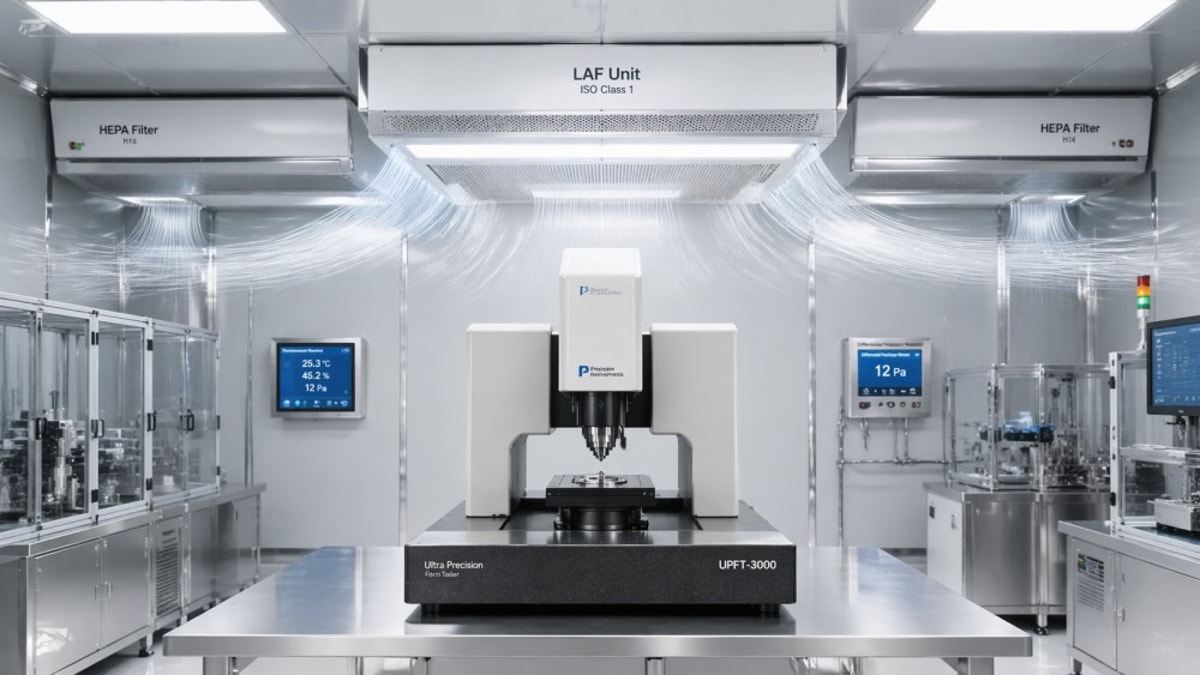
In cleanrooms, precision instrumentation operates inside a tightly controlled but highly interdependent environment. A pipetting robot, particle counter, analytical balance, optical inspection system, pressure sensor, or automated liquid handling platform may appear to fail on its own, yet the root cause often sits upstream or around it.
Common examples include:
- Airflow disturbance from poorly balanced Laminar Flow Units that affects weighing, optical sensing, or robotic positioning.
- Filter performance decline caused by overloaded or damaged filtration stages, including components supplied by a HEPA filter manufacturer, leading to particle excursions and contamination risk.
- Temperature and humidity drift that changes sensor calibration behavior, reagent stability, electrostatic conditions, and motion accuracy.
- Vibration transmission from HVAC systems, nearby process tools, foot traffic, or poorly isolated benches.
- Utility instability such as power quality issues, compressed gas fluctuations, or UHP gas delivery inconsistency.
- Improper cleaning and disinfection practices that degrade seals, optics, sensors, plastics, or moving assemblies.
- Containment-related interference inside Biosafety Cabinets and Class III Biosafety Cabinets, where airflow patterns, glove access limitations, or decontamination cycles affect instrument repeatability.
For this reason, organizations that treat failures as simple maintenance events often miss the larger reliability issue. The better approach is to assess instrumentation performance as part of a full cleanroom control strategy involving environment, utilities, containment, automation, and compliance.
What failures matter most to operators, QA teams, and management
Different stakeholders see different consequences, but the highest-value concerns are surprisingly consistent.
Operators and users typically care about immediate usability: unstable readings, failed runs, alarm frequency, difficult cleaning, calibration drift, and repeat interruptions to workflow. If an instrument becomes unreliable inside a controlled environment, the operational burden rises quickly.
Technical evaluators and engineers focus on root cause, installation conditions, tolerance windows, compatibility with cleanroom airflow, utility demands, validation status, and whether the asset can maintain performance under real production conditions rather than ideal demo conditions.
Quality control and safety managers care about deviation events, traceability, contamination risks, CAPA burden, and exposure to GMP, ISO, or biosafety nonconformance. In regulated facilities, even a minor measurement anomaly can become a significant documentation and compliance issue.
Procurement and business evaluators want to know total cost of ownership, maintenance frequency, spare parts availability, service response time, validation support, and the commercial impact of downtime. A lower purchase price means little if the instrument repeatedly disrupts production or regulated workflows.
Decision-makers and project leaders care most about business continuity. They want confidence that cleanroom investments support output, data integrity, and audit readiness rather than create hidden operational fragility.
The most common root causes of precision instrumentation failure in cleanrooms
While failure modes vary by industry, several causes repeatedly appear across pharmaceutical, biotech, semiconductor, advanced materials, and high-containment laboratories.
1. Airflow mismatch and poor placement
Even when a room meets its target classification, local airflow can still disrupt instrument performance. Sensitive balances, optical systems, open-stage robotic systems, and particle measurement devices are especially vulnerable. Poor placement near doors, returns, pass-throughs, or high-velocity supply zones can create turbulence that affects repeatability.
2. Filtration degradation and particle control weakness
Filter loading, seal leakage, bypass issues, or incorrect replacement practices can allow particulate levels to rise gradually before alarms become obvious. In critical zones, filter reliability from a qualified HEPA filter manufacturer is not just an air cleanliness issue; it directly affects instrument contamination exposure, maintenance frequency, and product risk.
3. Environmental instability beyond headline cleanroom specs
A room may technically comply with classification targets while still suffering from micro-variation in humidity, pressure differential, or temperature. Precision sensors and automated systems often fail at these margins. Stable conditions matter more than occasional compliance snapshots.
4. Incompatible cleaning, decontamination, and material exposure
Alcohols, hydrogen peroxide vapor, sporicidal agents, and frequent wipe-down protocols can shorten the life of displays, seals, adhesives, bearings, and cable jackets. Equipment selected without reviewing chemical compatibility often fails earlier than expected.
5. Inadequate maintenance and calibration strategy
Many facilities still rely on time-based maintenance intervals that do not reflect actual contamination load, duty cycle, or process criticality. As a result, calibration drift goes unnoticed, filters are replaced too late, and wear components remain in service past their practical stability window.
6. Utility and integration issues
Laboratory Automation systems depend on more than stable mechanics. They need clean power, reliable communications, appropriate grounding, and often integration with software, monitoring platforms, and upstream delivery systems. Small disturbances can create intermittent faults that are difficult to diagnose but highly disruptive in regulated environments.
7. Human factors and procedural inconsistency
Improper startup, rushed cleaning, poor changeover discipline, unauthorized adjustments, and weak training all contribute to failure. In cleanrooms, procedural variation can be just as damaging as hardware defects.
How failures affect GMP compliance, biosafety, and regulatory frameworks
Instrumentation failure in a cleanroom is not just a maintenance event; it can become a quality and regulatory event. This is especially true in GMP manufacturing, aseptic processing, cell and gene therapy, microbiology, and high-containment operations.
From a GMP Compliance standpoint, failures may compromise:
- Data integrity and audit trail confidence
- Environmental monitoring correlation
- Batch release decisions
- Calibration and qualification status
- Deviation and CAPA management workload
- Change control requirements after replacement or repair
In Biosafety Cabinets and Class III Biosafety Cabinets, instrumentation issues can also intersect with containment performance. A malfunctioning automated device may force manual intervention, increase operator exposure risk, or disrupt validated workflows designed for biosafety and Security Engineering objectives.
For organizations operating under multiple Regulatory Frameworks, the practical lesson is clear: failure prevention must be designed into procurement, installation, qualification, and operations. Waiting to respond after failure is more expensive and more dangerous than building resilience upfront.
What buyers and technical evaluators should check before selecting cleanroom instrumentation
If the goal is to reduce failure risk, equipment evaluation should go well beyond brochure specifications. Buyers should assess whether the instrument can perform reliably in the actual cleanroom, not merely in a standard lab setting.
Key evaluation questions include:
- Is the equipment rated or proven for the intended cleanroom classification and workflow?
- How sensitive is it to airflow, vibration, humidity, and electrostatic conditions?
- What are the cleaning and decontamination compatibility limits?
- Can the unit be effectively serviced without major disruption to controlled conditions?
- What calibration drift patterns are known in real use?
- Are spare parts, service support, and validation documents readily available?
- Does the supplier understand ISO 14644, GMP expectations, biosafety constraints, or relevant sector standards?
- How does the device interact with nearby Laminar Flow Units, containment systems, and Laboratory Automation infrastructure?
For procurement teams, these checks help distinguish a technically suitable asset from a commercially attractive but operationally risky one. The cheapest instrument often becomes the most expensive if it introduces recurring deviations, downtime, and requalification cost.
Practical steps to reduce failure risk in operating cleanrooms
Facilities that consistently reduce instrumentation failures tend to follow a few practical disciplines.
Map the environment around the instrument
Do not rely only on room-level compliance data. Review local airflow visualization, differential pressure behavior, vibration points, heat sources, and utility stability at the exact point of use.
Link maintenance to risk and performance data
Use trend data from alarms, calibration results, downtime logs, environmental monitoring, and deviation records to adjust maintenance intervals. Critical instruments should not be maintained on a generic schedule alone.
Validate real operating conditions
Factory acceptance tests are not enough. Site acceptance, installation qualification, operational qualification, and workflow simulation under actual cleanroom conditions provide far more useful evidence of long-term reliability.
Standardize cleaning and operator handling
Many avoidable failures come from inconsistent cleaning chemicals, wiping methods, startup sequencing, or consumable replacement practices. Clear SOPs and targeted retraining often deliver immediate reliability gains.
Audit filtration and airflow assets regularly
Performance of cleanroom instrumentation is inseparable from the condition of filters, housings, and airflow devices. Regular review of filter integrity, pressure drop trends, and airflow balance is essential, especially where contamination control is tight.
Build cross-functional ownership
Operations, engineering, QA, EHS, and procurement should not work in silos. The fastest way to miss systemic causes is to let each team investigate only its own narrow scope.
When to repair, redesign, or replace the system
Not every failure justifies equipment replacement. However, repeated failure under compliant-looking conditions is often a sign that the issue lies in system design rather than component wear alone.
Repair may be appropriate when:
- The fault is isolated and clearly verified
- The environmental conditions remain stable and within validated tolerance
- Service history shows no recurring pattern
Redesign should be considered when:
- The instrument repeatedly fails in the same location
- Airflow, vibration, access, or utility conditions are fundamentally unfavorable
- Containment requirements conflict with instrument operating needs
Replacement is often the best decision when:
- The equipment is no longer compatible with cleaning or biosafety demands
- Support, parts, or software validation become difficult to maintain
- Total lifecycle cost exceeds the cost of a better-suited platform
For management, the right decision should be based on total business risk, not just repair price. In high-value cleanrooms, one recurring weak point can cost more than a planned upgrade.
Conclusion
When precision instrumentation fails in cleanrooms, the real issue is usually broader than the instrument itself. Reliability depends on the interaction between Cleanroom Engineering, airflow, filtration, Laboratory Automation, maintenance discipline, and regulatory expectations. For operators, the priority is stable performance. For QA and safety teams, it is control and compliance. For buyers and executives, it is risk reduction, uptime, and lifecycle value. The most effective strategy is to treat instrumentation as part of a controlled system, not as a standalone purchase. Facilities that do this well see fewer failures, stronger GMP Compliance, and better protection of both product quality and biosafety objectives.
- manufacturing
- bearings
- sensors
- cement
- adhesives
- chemicals
- semiconductor
- hepa filter manufacturer
- Cleanroom Engineering
- Controlled Environments
- Biosafety Cabinets
- Laboratory Automation
- Precision Instrumentation
- GMP Compliance
- Laminar Flow Units
- Class III Biosafety Cabinets
- Regulatory Frameworks
- Security Engineering
Related News
- Precision Instrumentation Buying Mistakes to AvoidApr 29, 2026Precision Instrumentation buying mistakes to avoid: from GMP Compliance and Regulatory Frameworks to Biosafety Cabinets, Laboratory Automation, Cleanroom Engineering, and Laminar Flow Units.
- How Security Engineering Supports GMP ComplianceApr 29, 2026Security Engineering drives GMP Compliance by integrating Biosafety Cabinets, Cleanroom Engineering, Laboratory Automation, and Laminar Flow Units for safer, audit-ready operations.
- When Precision Instrumentation Fails in CleanroomsApr 29, 2026Precision Instrumentation failures in cleanrooms can impact GMP Compliance, Biosafety Cabinets, Laboratory Automation, and Cleanroom Engineering—discover the root causes and how to prevent costly downtime.
- Security Engineering Gaps That Delay Lab ProjectsApr 29, 2026Security Engineering gaps in Biosafety Cabinets, GMP Compliance, Laboratory Automation, and Cleanroom Engineering can delay lab projects. Discover practical fixes and reduce risk faster.