Weekly Insights
Stay ahead with our curated technology reports delivered every Monday.
Security Engineering gaps can quietly derail lab timelines, budgets, and GMP Compliance goals long before commissioning begins. From Biosafety Cabinets and Class III Biosafety Cabinets to Cleanroom Engineering, Laminar Flow Units, Precision Instrumentation, Laboratory Automation, and hepa filter manufacturer selection, overlooked design and Regulatory Frameworks create costly delays. This article examines where these failures emerge and how technical, procurement, and project leaders can reduce risk across high-stakes laboratory environments.
For multinational laboratories, pilot plants, semiconductor process areas, biologics facilities, and advanced research campuses, delays rarely start with a single dramatic failure. More often, they begin with small mismatches between containment design, airflow strategy, automation interfaces, utility routing, and validation planning. By the time these gaps are visible on site, teams may already be facing 4- to 12-week schedule slips, change-order pressure, and repeated design reviews.
This matters to more than engineers. Operators need safe and usable environments, procurement teams need specification clarity, quality managers need traceable compliance pathways, and executives need capital projects to move from design to qualification with fewer surprises. In complex lab environments, security engineering is not a single package; it is the coordinated performance of containment, controls, utilities, airflow, monitoring, access, and documentation.
Where Security Engineering Gaps Begin in Laboratory Projects
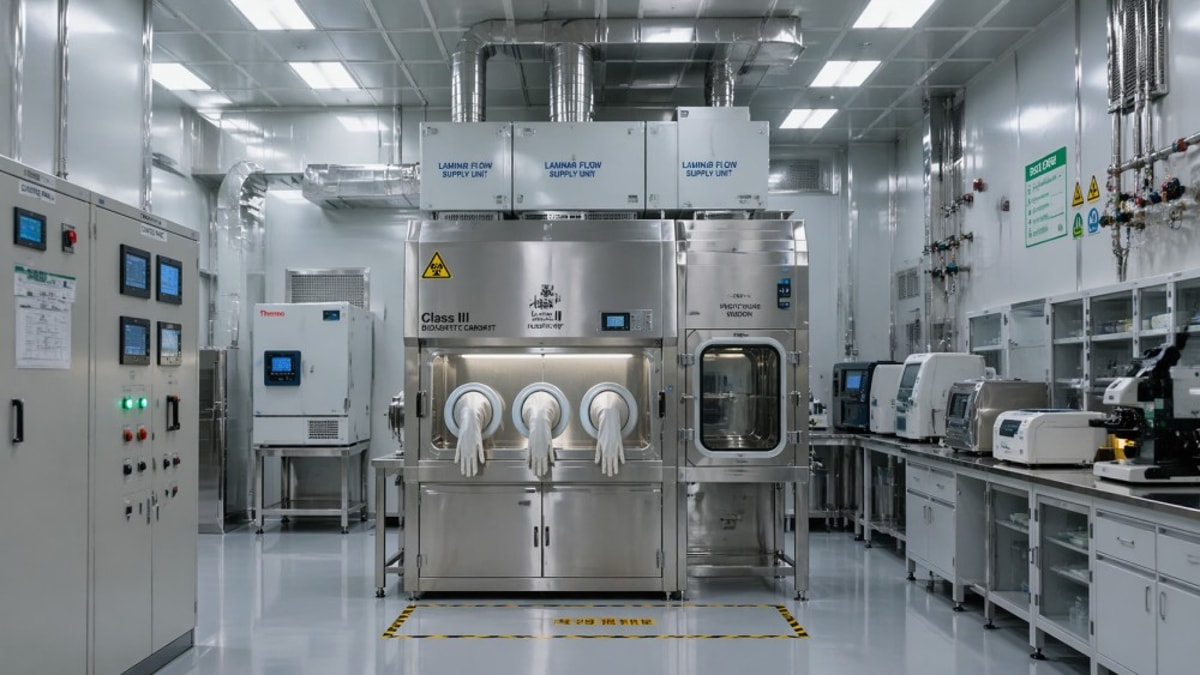
Many lab projects are delayed before equipment arrives because the early design basis does not translate operational risk into engineering requirements. A BSL-3 suite, a GMP microbiology lab, and a semiconductor metrology room may all require controlled access, pressure discipline, alarm logic, and contamination control, but the acceptable thresholds are not identical. When teams use generic specifications, the result is redesign during detailed engineering rather than during concept definition.
A common example is airflow and containment coordination. A biosafety cabinet may be correctly selected under NSF/ANSI 49 expectations, yet the room exhaust balance, door interlocks, and terminal HEPA strategy are not aligned. That can trigger failed smoke visualization, unstable pressure cascades of 10–15 Pa, or operator workflow conflicts that only become obvious during site acceptance testing. In practical terms, one incomplete interface decision can consume 2–6 extra weeks.
Another frequent gap appears in utility and controls integration. Laboratory automation platforms, ultra-high purity gas delivery, monitoring sensors, and access control systems are often purchased from separate vendors. If signal mapping, network architecture, and alarm hierarchy are not frozen early, commissioning teams spend valuable time resolving communication failures between PLCs, building management systems, and environmental monitoring software.
The table below highlights the most common sources of delay at the front end of security engineering decisions.
The key takeaway is that delays are usually systemic, not isolated. When containment, utilities, controls, and compliance are treated as separate workstreams, the project loses coordination speed. A disciplined front-end engineering process can remove a large share of avoidable redesign before procurement packages are released.
Three early-stage indicators that a project is underdefined
- Room data sheets do not include pressure targets, air change intent, recovery criteria, or alarm setpoints.
- Equipment schedules omit exhaust volume, heat load, network requirements, or maintenance clearances of 600–900 mm.
- User requirement specifications describe performance goals, but not acceptance methods, witness points, or documentation deliverables.
If even one of these indicators is present across multiple rooms or systems, project managers should expect higher coordination effort during detailed design and FAT/SAT phases.
Critical Interface Failures Across Cleanrooms, Biosafety, and Automation
Security engineering delays become especially costly at system interfaces. In a controlled environment, a Class III biosafety cabinet is not just a standalone containment device; it affects pass-through design, glove testing access, decontamination procedures, exhaust treatment, and emergency response. The same logic applies to ISO-classified cleanrooms and automation cells. If interface assumptions differ between vendors, installation may proceed, but qualification often stalls.
Air management is one of the most sensitive examples. Laminar flow units, terminal HEPA modules, return grilles, and biosafety exhaust systems need coordinated velocities and room patterns. Typical face velocity targets, pressure offsets, and filter integrity test points must be reconciled with actual room geometry. A poor layout can create dead zones, turbulence near critical work surfaces, or unstable door-opening recovery times above 30–60 seconds.
Precision instrumentation introduces another layer of risk. Analytical balances, microscopy systems, genomic preparation platforms, and liquid handlers can be vulnerable to vibration, thermal drift, electrostatic effects, or inaccessible maintenance space. When security and contamination controls are designed without considering operator ergonomics and service access, the facility may be compliant on paper but inefficient or unsafe in operation.
High-risk interfaces that are often underestimated
Project teams should treat the following interfaces as formal design checkpoints rather than late coordination issues.
- Cabinet-to-room airflow interaction, including exhaust and pressure recovery after door cycles.
- Automation-to-building controls communication, especially alarm priority and batch-critical event logging.
- HEPA housing access, scan test clearances, and maintenance paths for replacement without contamination spread.
- UHP gas or chemical routing relative to containment barriers, shutoff logic, and purge sequencing.
- Access control interlocks linked with egress safety, decontamination steps, and emergency override.
Why HEPA manufacturer selection affects schedule risk
Selecting a hepa filter manufacturer is often treated as a procurement detail, but it directly affects validation and maintenance strategy. Teams need clarity on media performance, housing compatibility, leak test access, replacement lead times, and documentation quality. In many projects, the delay does not come from filter performance itself; it comes from mismatched housings, incomplete certificates, or late discovery that the installed arrangement does not support efficient in situ integrity testing.
The following comparison table shows how interface quality influences project outcomes.
When these interfaces are planned as integrated systems instead of discrete purchases, commissioning becomes more predictable. That predictability matters to every stakeholder, from users who depend on uninterrupted workflows to procurement teams trying to limit cost growth after purchase orders are issued.
Regulatory Misalignment: How Compliance Gaps Turn Into Project Delays
Regulatory alignment is often discussed late, but the delay cost is highest when compliance assumptions are not translated into engineering details. GMP, ISO 14644, NSF/ANSI 49, SEMI expectations, internal biosafety protocols, and corporate EHS rules each shape design decisions differently. A room may meet a cleanliness target while still failing documentation, access segregation, calibration traceability, or containment verification requirements.
One frequent problem is overgeneralization. Teams may specify “GMP-ready” or “BSL-capable” without stating which documents, tests, or operating modes are required. That ambiguity becomes expensive during IQ/OQ preparation. For example, if a decontamination cycle, room pressure recovery test, or alarm challenge test is not included in the original functional design, controls logic and SOPs must be revised later, often under time pressure.
Documentation quality also influences schedule performance. Laboratories handling sensitive materials typically need equipment manuals, certificates, calibration records, weld logs where relevant, filter data, software revision control, and maintenance procedures. Missing even 5–10 critical documents can postpone qualification sign-off, even when the physical installation appears complete.
Compliance planning should start with four linked definitions
- Required operational state: normal, standby, alarm, power loss, and emergency purge or containment response.
- Acceptance criteria: pressure range, airflow behavior, access control sequence, alarm delay, and recovery period.
- Evidence package: protocols, certificates, as-built drawings, test records, and change history.
- Ownership matrix: who approves design, who witnesses FAT/SAT, and who signs final release.
These four definitions reduce interpretation gaps between engineering, quality, and operations. They also help procurement avoid sourcing components that fit budget requirements but complicate validation.
Typical compliance-driven delay points
In high-spec laboratories, the most common regulatory delay points include alarm logic not matching SOPs, monitoring points located where they cannot represent critical conditions, inaccessible test points, and software functions lacking audit trail support. Each issue may seem minor, but together they can extend startup by 3–8 weeks, particularly where quality release must precede first production or research use.
For project leaders, the practical lesson is simple: compliance should be engineered, not appended. If regulatory expectations are embedded in equipment specifications, room data sheets, control narratives, and turnover documentation, the project is far less likely to stall at handover.
Procurement Decisions That Either Protect or Expose the Schedule
Procurement has a direct influence on security engineering outcomes because specification quality determines what suppliers actually deliver. In many delayed projects, procurement teams are forced to compare proposals that look similar on price but differ significantly in testability, documentation depth, lead times, spare part strategy, and integration support. Lowest purchase price can quickly become highest installed cost when hidden engineering gaps emerge during FAT, delivery, or qualification.
This is especially true for biosafety cabinets, containment barriers, laminar flow units, UHP distribution assemblies, and lab automation platforms. These systems must be evaluated not only for rated performance, but also for service access, local compliance support, training scope, and replacement component availability. A 2-week difference in quoted equipment lead time may matter less than a 10-week delay in documentation closure or control integration.
Procurement teams should therefore assess suppliers using technical and project criteria together. The most reliable vendors tend to provide clear submittals, coordinated utility data, defined FAT/SAT boundaries, and realistic maintenance instructions rather than vague promises of “full compliance.”
Procurement evaluation matrix for security-sensitive lab systems
The matrix below can help sourcing, engineering, and quality teams evaluate proposals on a common basis.
The strongest procurement process is cross-functional. Technical evaluators define must-have performance criteria, quality teams define documentation and verification needs, and procurement negotiates commercial terms without weakening the specification. That structure reduces post-award ambiguity and improves forecast accuracy for project managers.
Five procurement questions that reduce rework
- What performance conditions are guaranteed on site, and which are only factory-tested?
- Which interfaces remain by others, including ducting, drains, controls, and structural supports?
- What documents are delivered before shipment, at delivery, and at qualification turnover?
- How long are consumable and spare-part lead times, especially filters, sensors, and control components?
- What training is included for operators, maintenance staff, and quality witnesses?
These questions are simple, but they expose hidden scope splits that commonly create disputes and delay closure during the final 20% of the project timeline.
Implementation Roadmap: How to Reduce Security Engineering Delay Risk
Reducing delay risk requires a structured implementation model that connects design, procurement, installation, and qualification. In practice, the most successful laboratory projects use a staged approach with formal decision gates. This allows teams to identify security engineering conflicts while changes are still low-cost. Once fabrication begins, even a small change to airflow, containment access, or controls architecture can trigger cascading impacts.
A practical roadmap usually contains five stages: concept definition, coordinated design, procurement release, FAT/SAT preparation, and qualification handover. Each stage should end with a documented review of interfaces, compliance assumptions, and outstanding risks. If a project team skips one of these gates, they often pay for that speed later through rework and retesting.
Recommended 5-stage control model
- Concept stage: define containment level, room classification, workflow segregation, and risk priorities.
- Design stage: lock room data sheets, utility schedules, access logic, and validation expectations.
- Procurement stage: align vendor scope, lead times, FAT plan, and documentation deliverables.
- Execution stage: verify installation readiness, interface completion, and pre-commissioning checks.
- Handover stage: complete SAT, IQ/OQ evidence, operator training, and maintenance planning.
Risk controls that are worth the effort
Several controls consistently produce value across industries. First, run interdisciplinary design reviews at least every 2–3 weeks during active engineering. Second, require vendor point lists and utility data before final layout sign-off. Third, build testability into the installation by protecting access to filters, dampers, sensors, and control panels. Fourth, define escalation thresholds so unresolved issues do not drift across multiple meetings without ownership.
Project managers should also monitor soft indicators. Repeated drawing revisions, unclear RFI responses, and late issue of submittals are often early warnings of larger delivery problems. If three or more critical interfaces remain open within 30 days of shipment, schedule contingency should be reviewed immediately.
FAQ for technical buyers and project stakeholders
How long should security engineering coordination take before procurement?
For a moderate-complexity laboratory package, 4–8 weeks of coordinated definition is common before major procurement release. High-containment or heavily automated environments may require longer if multiple systems share controls, exhaust, or decontamination dependencies.
Which systems create the most hidden schedule risk?
The most common high-risk systems are biosafety cabinets connected to room HVAC, Class III containment barriers, laminar flow arrangements above critical processes, automation integrated with building controls, and HEPA-based systems without clear service and test access.
What should operators ask before handover?
Operators should ask about alarm meaning, recovery procedures, maintenance intervals, filter replacement steps, calibration frequencies, and what conditions require shutdown. Practical usability is as important as design intent because operator workarounds can undermine security and compliance.
When is a redesign more cost-effective than patching issues in commissioning?
If the issue affects core containment logic, room pressure architecture, egress safety, or validation feasibility, redesign is often cheaper before qualification than repeated patching after installation. The later the correction occurs, the more it affects training, SOPs, and turnover documentation.
Security engineering gaps are rarely caused by one bad component. They usually result from fragmented requirements, weak interface definition, incomplete procurement criteria, and compliance planning that starts too late. In high-stakes laboratory environments, better outcomes come from integrating containment, airflow, utilities, automation, validation, and documentation as one coordinated delivery model.
For CTOs, lab directors, quality leaders, procurement teams, and project managers, the priority is clear: define critical interfaces early, buy against measurable requirements, and validate with the end state in mind. If you are planning a cleanroom, biosafety, UHP delivery, automation, or specialized lab infrastructure project, now is the right time to review your risk points, refine specifications, and secure a more reliable path to commissioning.
To reduce schedule exposure and improve decision quality, contact us to discuss your laboratory environment strategy, request a tailored technical benchmark, or learn more about fit-for-purpose solutions across controlled environments and biosafety-critical operations.
Related News
- Precision Instrumentation Buying Mistakes to AvoidApr 29, 2026Precision Instrumentation buying mistakes to avoid: from GMP Compliance and Regulatory Frameworks to Biosafety Cabinets, Laboratory Automation, Cleanroom Engineering, and Laminar Flow Units.
- How Security Engineering Supports GMP ComplianceApr 29, 2026Security Engineering drives GMP Compliance by integrating Biosafety Cabinets, Cleanroom Engineering, Laboratory Automation, and Laminar Flow Units for safer, audit-ready operations.
- When Precision Instrumentation Fails in CleanroomsApr 29, 2026Precision Instrumentation failures in cleanrooms can impact GMP Compliance, Biosafety Cabinets, Laboratory Automation, and Cleanroom Engineering—discover the root causes and how to prevent costly downtime.
- Security Engineering Gaps That Delay Lab ProjectsApr 29, 2026Security Engineering gaps in Biosafety Cabinets, GMP Compliance, Laboratory Automation, and Cleanroom Engineering can delay lab projects. Discover practical fixes and reduce risk faster.